
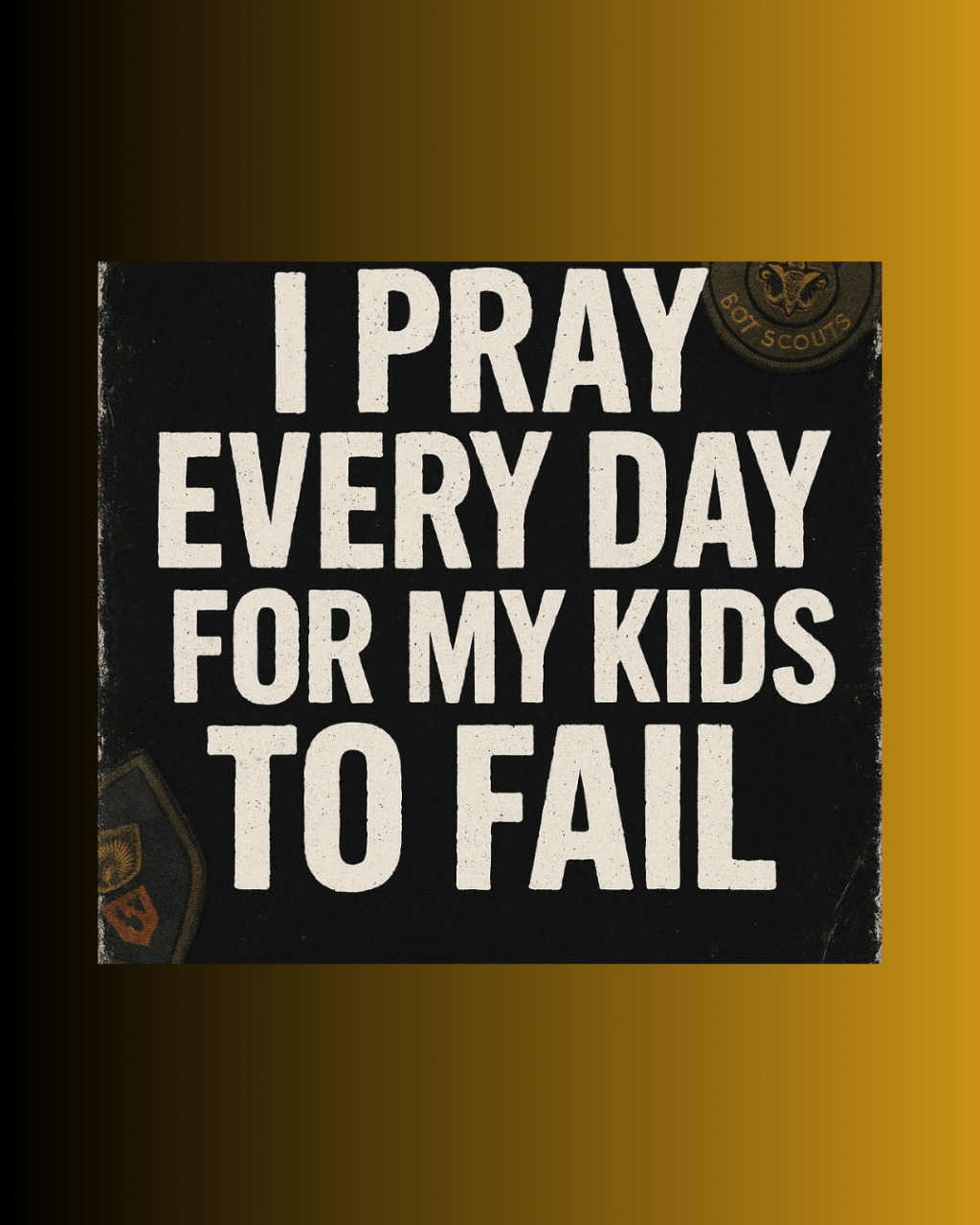
I Hope My Kids Flop, And I Mean Big Time

Yeah, you heard me. I want them to blow it. Fall flat on their faces. Get knocked around a little by life. Every day, I hope my kids trip on something real. Zero out of ten.

That’s the best thing a parent can do? Tell them to:

Go, get a little dinged up.

Skin those knees.

Get a little road rash.

Blow off studying, then bomb a test so hard it’s embarrassing.

Put yourself out there. Tell her or him you like them. Freeze up in front of your crush and mutter something incoherent about “math.” Get your hormone raging heart stomped on. Swing for the fences.

I hope they get a few bruises, a couple heartbreaks, and one or two epic flops they’ll laugh about in ten years.

Then tomorrow you’ll wake up and do it all again.

The best thing I can do is get out of their way and let them actually live.

We are reaching the point of no return with our younger generations. And we are the ones hurting them. We’re inflicting the damage. Because the alternative, an alternative that every anxious parent is chasing, is so much more hurtful; a flawless, no-bump, no hurt, no risk, no sacrifice, selective empathy, click bait, clout chasing, Instagram-filtered existence where nobody ever gets a bruise or, gasp, a B-minus. Only the good stuff gets let in. And only the good stuff is revealed to others.

It’s a fantasy. And worse, it’s a trap. You know what that creates? Kids who can’t handle any adversity. We are dangerously close to raising a generation of kids who can’t handle disappointment, because we never let them feel it.

We are the ones inflicting the damage. We chase a fantasy where everything goes right, where nobody ever gets hurt, and where every kid is “gifted” and “trauma-free.” You know what that creates?

Emotionally brittle adults.

The kind who scream at waitstaff.

The kind who melt down when their Wi-Fi is slow.

The kind who call HR because someone looked at them wrong.

This isn’t just about participation trophies anymore. It’s about parenting as performance art, curated childhoods built for Instagram, not resilience.

Helicopter Parenting with Bonus Anxiety: Now with Extra Bubble Wrap

Today’s parenting model has three speeds: Hover, Intervene, and Panic.
We’ve become experts in bubble-wrapping their children’s lives.

Scraped knee? Lawyer up.

Sad face? Home trauma therapy with essential oils and lavender head wraps.

Forget or didn’t do the homework? Every academic stumble is DEFCON 5. Every B grade is a time to call the principal, draft a complaint email, and accuse the teacher of jeopardizing Ivy League dreams.

We say we want resilient kids, but the second life gets bumpy, we dive in like a linebacker on Red Bull.

Want confident kids? Let them screw up and figure it out.

Want empathetic kids? Let them make a mess, own it, and apologize.

Want your kid to know what grit is? Then stop sweeping the damn path and let them trip.

If you’re still planning your kid’s playdates, emailing their high school teacher about late homework, or reading their college essays out loud “just to check tone,” this next part might sting.

Kids Need to Bleed (Relax, I Mean Figuratively…Mostly)

Let’s break it down.

Physical risks: They need to climb too high and remember what gravity is. Climbing too high, jumping too far, running too fast. That’s where they learn their limits.

Emotional risks: Let them fall for someone. Even if they don’t know how the other person feels about them back. Let them stick up for the shy awkward kid and then get roasted for it. That’s called character development, baby.

Academic risks: Bomb the midterm. Learn to study harder. Let them take the class that challenges everything they think they know about the world, until now.

Character is forged when we realize and accept, we don’t know everything. Let them test their unpopular opinions. Courage isn’t built in the comfort zone.

Social risks: Make them show up, even when they are afraid. Tell a joke that bombs. Say hi and sit at the “wrong” lunch table. That’s where identity is born.

Failure is the price of admission to reality. If your kid isn’t failing at something, they’re either lying about it or living too small.

Even the Experts Think You’re Blowing It

Psychologist Angela Duckworth, author of Grit, found that the key predictor of long-term success isn’t IQ or talent, it’s perseverance. And you don’t develop grit when Mom cushions every fall. And guess what builds perseverance? Failure.

Tim Elmore says “over functioning parents” raise under functioning kids. Shocker! Turns out, if you never let your kid mess up, they don’t learn anything except how to be angry when Door Dash is late. His work with Growing Leaders, warns of the “over functioning parent,” who cripples their child’s development by never letting them suffer natural consequences. Insulating kids from failure doesn’t just delay growth, it derails it.

Yes, There’s a Middle Ground

Now, before someone fires off an angry comment, let’s be clear:

This isn’t a call for neglect.

Kids still need support. They need love. They need boundaries. They need someone in their corner, not someone running onto the field to play the game for them.

Letting your kid fail doesn’t mean you stop parenting.

It means you start coaching, not controlling.

You’re the safety net, not the puppet master.

Why I’m Cheering for Failure

When my kid eats dirt on a test, maybe they’ll actually crack open the book next time.

When my son didn’t make the basketball team, he cried in his room. Then he tried out for track. Turns out, he’s fast as hell.

When one of them forgot their lunch, I didn’t UberEats a bento box. They borrowed crackers from a friend and lived to tell the tale.

When they get dumped, they discover you can, in fact, live through heartbreak.

When they blow the job interview, they’ll prep better.

When they lose, they’ll learn to handle it like a human.

And here’s the kicker: When they fail, they realize they’re not made of glass. They learn they don’t need you to rescue them. They just need you to support them. When they fail, they learn they are capable, gritty, and adaptable. They learn they can handle it, dust off, and go again.

Which is the entire point.

Stop Catching Them Already

Want a tough kid? Stop bubble-wrapping the world.

Want a wise kid? Let them be wrong.

Want a kind kid? Let them screw up, then let them apologize.

It’s not that I don’t love them. It’s that I love them enough to let them get clobbered by reality while I’m still here to help them up, not airlift them out.

So yeah. I pray every day for my kids to fail.

And I pray even harder that I’ll be brave enough to let them.


I Hope My Kids Flop, And I Mean Big Time

Yeah, you heard me. I want them to blow it. Fall flat on their faces. Get knocked around a little by life. Every day, I hope my kids trip on something real. Zero out of ten.

That’s the best thing a parent can do? Tell them to:

Go, get a little dinged up.

Skin those knees.

Get a little road rash.

Blow off studying, then bomb a test so hard it’s embarrassing.

Put yourself out there. Tell her or him you like them. Freeze up in front of your crush and mutter something incoherent about “math.” Get your hormone raging heart stomped on. Swing for the fences.

I hope they get a few bruises, a couple heartbreaks, and one or two epic flops they’ll laugh about in ten years.

Then tomorrow you’ll wake up and do it all again.

The best thing I can do is get out of their way and let them actually live.

We are reaching the point of no return with our younger generations. And we are the ones hurting them. We’re inflicting the damage. Because the alternative, an alternative that every anxious parent is chasing, is so much more hurtful; a flawless, no-bump, no hurt, no risk, no sacrifice, selective empathy, click bait, clout chasing, Instagram-filtered existence where nobody ever gets a bruise or, gasp, a B-minus. Only the good stuff gets let in. And only the good stuff is revealed to others.

It’s a fantasy. And worse, it’s a trap. You know what that creates? Kids who can’t handle any adversity. We are dangerously close to raising a generation of kids who can’t handle disappointment, because we never let them feel it.

We are the ones inflicting the damage. We chase a fantasy where everything goes right, where nobody ever gets hurt, and where every kid is “gifted” and “trauma-free.” You know what that creates?

Emotionally brittle adults.

The kind who scream at waitstaff.

The kind who melt down when their Wi-Fi is slow.

The kind who call HR because someone looked at them wrong.

This isn’t just about participation trophies anymore. It’s about parenting as performance art, curated childhoods built for Instagram, not resilience.

Helicopter Parenting with Bonus Anxiety: Now with Extra Bubble Wrap

Today’s parenting model has three speeds: Hover, Intervene, and Panic.
We’ve become experts in bubble-wrapping their children’s lives.

Scraped knee? Lawyer up.

Sad face? Home trauma therapy with essential oils and lavender head wraps.

Forget or didn’t do the homework? Every academic stumble is DEFCON 5. Every B grade is a time to call the principal, draft a complaint email, and accuse the teacher of jeopardizing Ivy League dreams.

We say we want resilient kids, but the second life gets bumpy, we dive in like a linebacker on Red Bull.

Want confident kids? Let them screw up and figure it out.

Want empathetic kids? Let them make a mess, own it, and apologize.

Want your kid to know what grit is? Then stop sweeping the damn path and let them trip.

If you’re still planning your kid’s playdates, emailing their high school teacher about late homework, or reading their college essays out loud “just to check tone,” this next part might sting.

Kids Need to Bleed (Relax, I Mean Figuratively…Mostly)

Let’s break it down.

Physical risks: They need to climb too high and remember what gravity is. Climbing too high, jumping too far, running too fast. That’s where they learn their limits.

Emotional risks: Let them fall for someone. Even if they don’t know how the other person feels about them back. Let them stick up for the shy awkward kid and then get roasted for it. That’s called character development, baby.

Academic risks: Bomb the midterm. Learn to study harder. Let them take the class that challenges everything they think they know about the world, until now.

Character is forged when we realize and accept, we don’t know everything. Let them test their unpopular opinions. Courage isn’t built in the comfort zone.

Social risks: Make them show up, even when they are afraid. Tell a joke that bombs. Say hi and sit at the “wrong” lunch table. That’s where identity is born.

Failure is the price of admission to reality. If your kid isn’t failing at something, they’re either lying about it or living too small.

Even the Experts Think You’re Blowing It

Psychologist Angela Duckworth, author of Grit, found that the key predictor of long-term success isn’t IQ or talent, it’s perseverance. And you don’t develop grit when Mom cushions every fall. And guess what builds perseverance? Failure.

Tim Elmore says “over functioning parents” raise under functioning kids. Shocker! Turns out, if you never let your kid mess up, they don’t learn anything except how to be angry when Door Dash is late. His work with Growing Leaders, warns of the “over functioning parent,” who cripples their child’s development by never letting them suffer natural consequences. Insulating kids from failure doesn’t just delay growth, it derails it.

Yes, There’s a Middle Ground

Now, before someone fires off an angry comment, let’s be clear:

This isn’t a call for neglect.

Kids still need support. They need love. They need boundaries. They need someone in their corner, not someone running onto the field to play the game for them.

Letting your kid fail doesn’t mean you stop parenting.

It means you start coaching, not controlling.

You’re the safety net, not the puppet master.

Why I’m Cheering for Failure

When my kid eats dirt on a test, maybe they’ll actually crack open the book next time.

When my son didn’t make the basketball team, he cried in his room. Then he tried out for track. Turns out, he’s fast as hell.

When one of them forgot their lunch, I didn’t UberEats a bento box. They borrowed crackers from a friend and lived to tell the tale.

When they get dumped, they discover you can, in fact, live through heartbreak.

When they blow the job interview, they’ll prep better.

When they lose, they’ll learn to handle it like a human.

And here’s the kicker: When they fail, they realize they’re not made of glass. They learn they don’t need you to rescue them. They just need you to support them. When they fail, they learn they are capable, gritty, and adaptable. They learn they can handle it, dust off, and go again.

Which is the entire point.

Stop Catching Them Already

Want a tough kid? Stop bubble-wrapping the world.

Want a wise kid? Let them be wrong.

Want a kind kid? Let them screw up, then let them apologize.

It’s not that I don’t love them. It’s that I love them enough to let them get clobbered by reality while I’m still here to help them up, not airlift them out.

So yeah. I pray every day for my kids to fail.

And I pray even harder that I’ll be brave enough to let them.

Leave a comment