
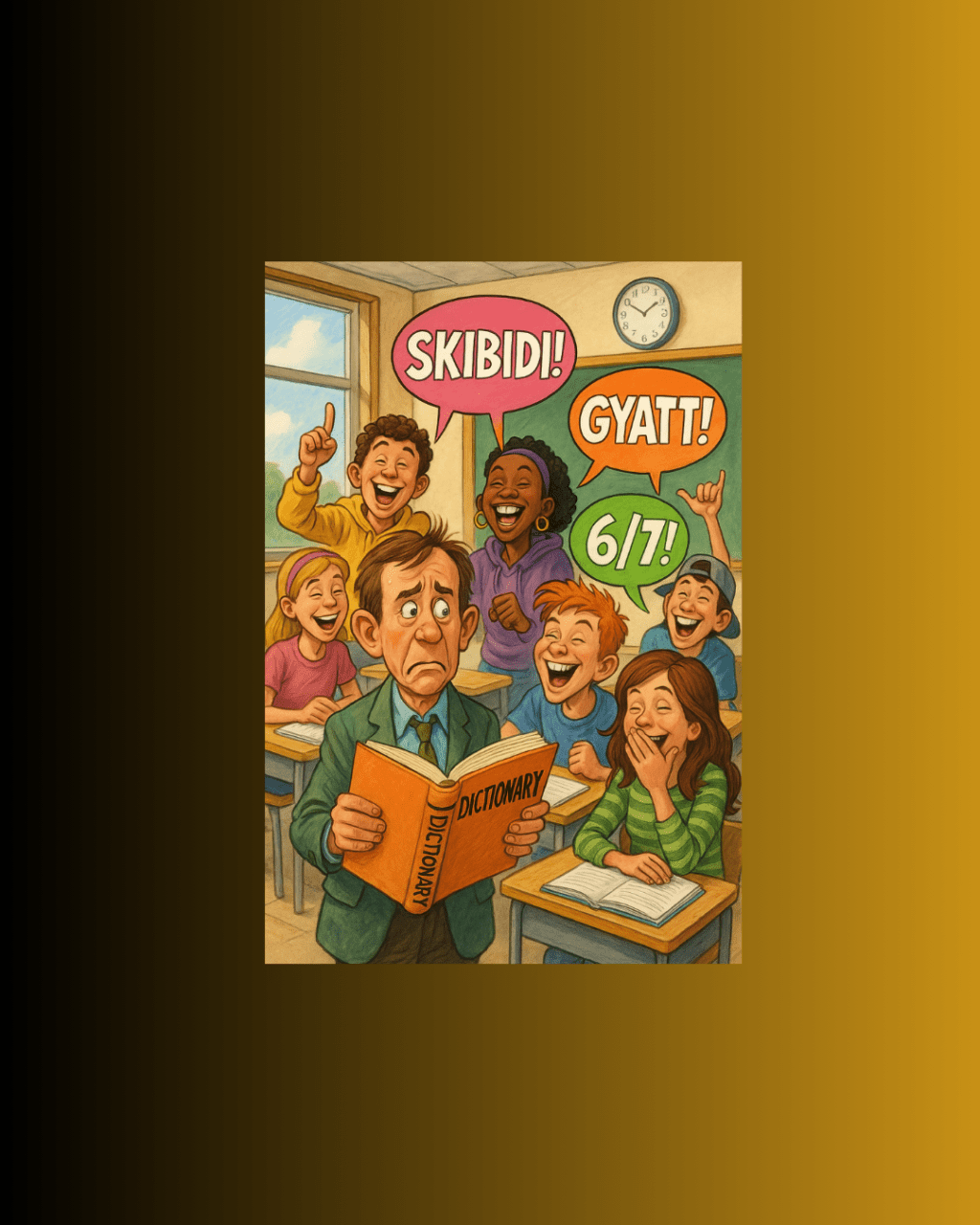
From Skibidi to SIMP, these are the words invading classrooms (and your dinner table). Learn them now, before your kids weaponize them against you.
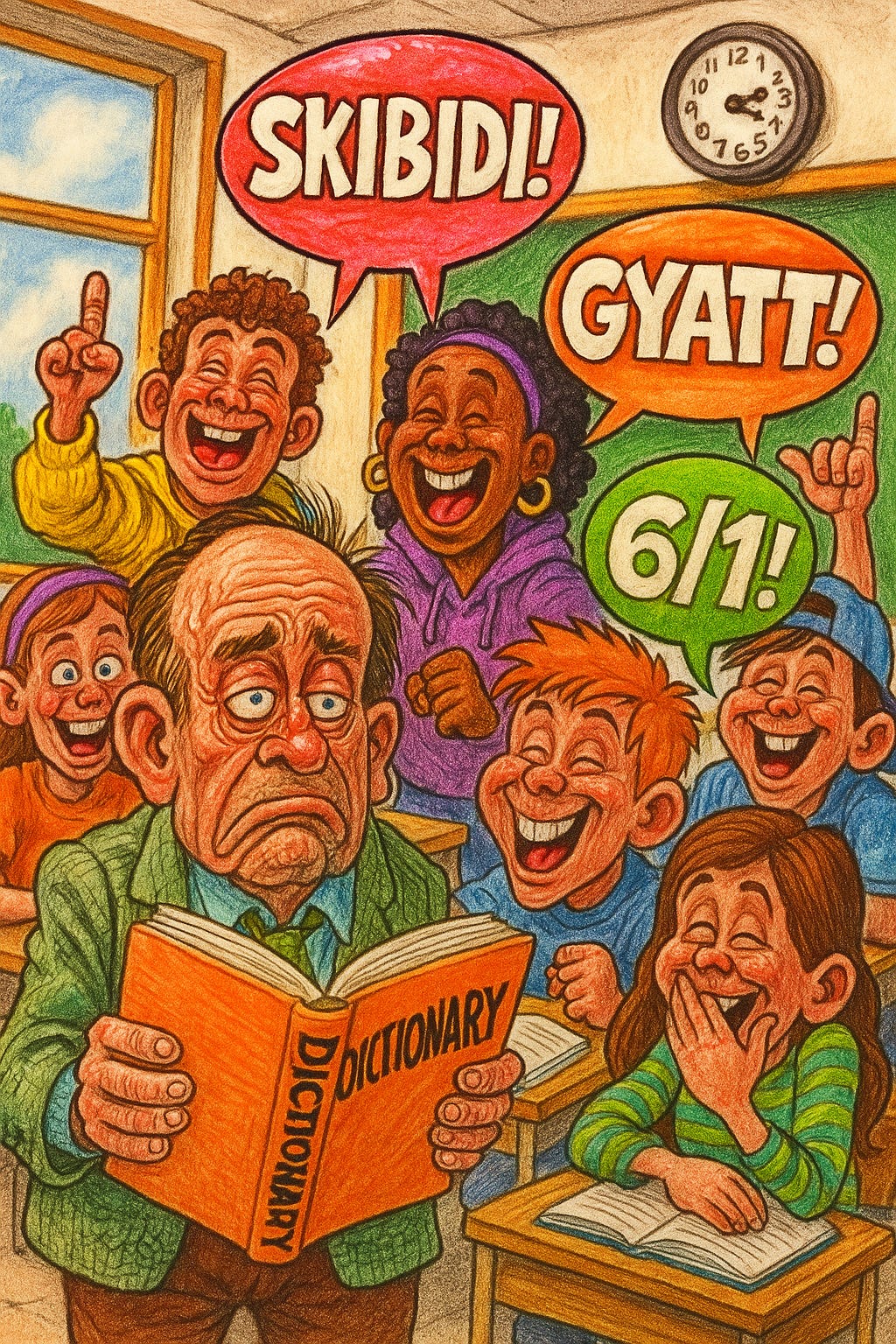
It’s the most wonderful time of the year! The kids are out of the house and back in school. Whether it be middle school, elementary, high school or college, there will be a lot of learning happening.

Quite simply your kids will be coming home with a a lot of new terms and slang. And when they realize you don’t understand it, it will become their secret language.

So as a public service to all parents, here is a list of the top phrases and slang your kid will bringing home this year.

Good luck

1. Skibidi

This is a harmless nonsensical ter. It can be used for a variety of reasons. Usually it’s a a playful placeholder or to mean something cool, silly, or meaningless that evolved form online meme culture.

The term “skibidi” is a perfect example of how internet culture and memes create new slang that is completely divorced from real world language.

While it’s debated the one true origin of skibidi, most of the credit comes from The “Skibidi Toilet” Web Series. In early 2023, a YouTube animator named Alexey Gerasimov (DaFuq!? Boom!) created a short-form animated series called Skibidi Toilet. The series features an army of disembodied human heads popping out of toilets and singing the “skibidi” mashup as their battle cry. They are at war with another group of humanoids who have cameras, TVs, and speakers for heads.

It’s stupid, it’s gross, it’s immature. But hey, we had our stupid too; remember Garbage Pail Kids, Mad Magazine, and the entire existence of Carrot Top?

2. Brain Rot
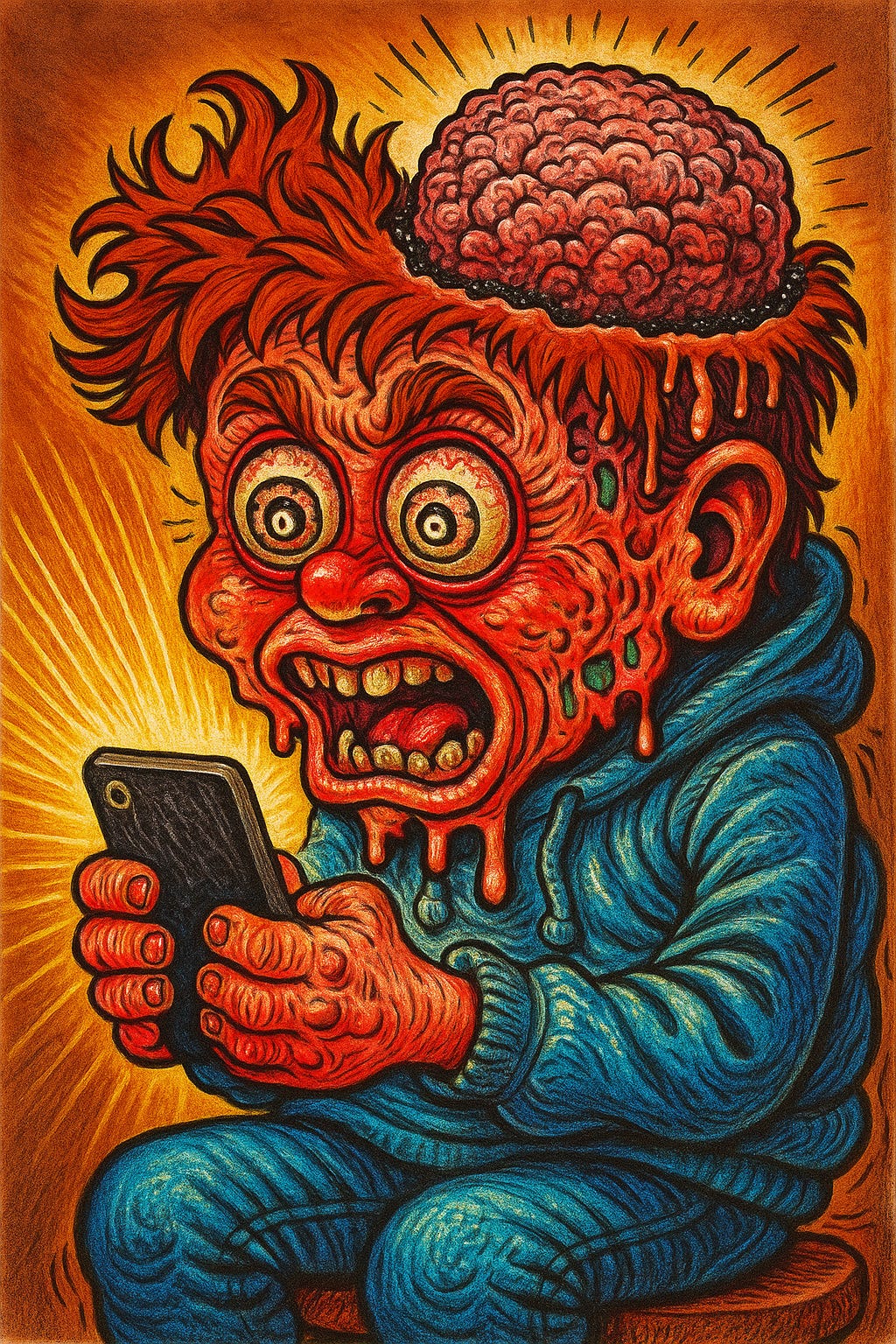
The term “skibidi” and the Skibidi Toilet series are often cited as prime examples of “brain rot”. It simply means low-value, mindless, and nonsensical internet content that captivates the attention of young audiences. While brain rot content can be funny, innovative, relevant and creative, it is believed to “rot” their brains. That’s simply because the content is so shallow. There’s no challenge to consuming it.

It’s harmless, but watch the amount of consumption and time spent consuming. A good book usually clears this up ASAP. Or at least it did for us, back when our ‘brain rot’ was staring at a lava lamp for three hours straight.

3. Goon
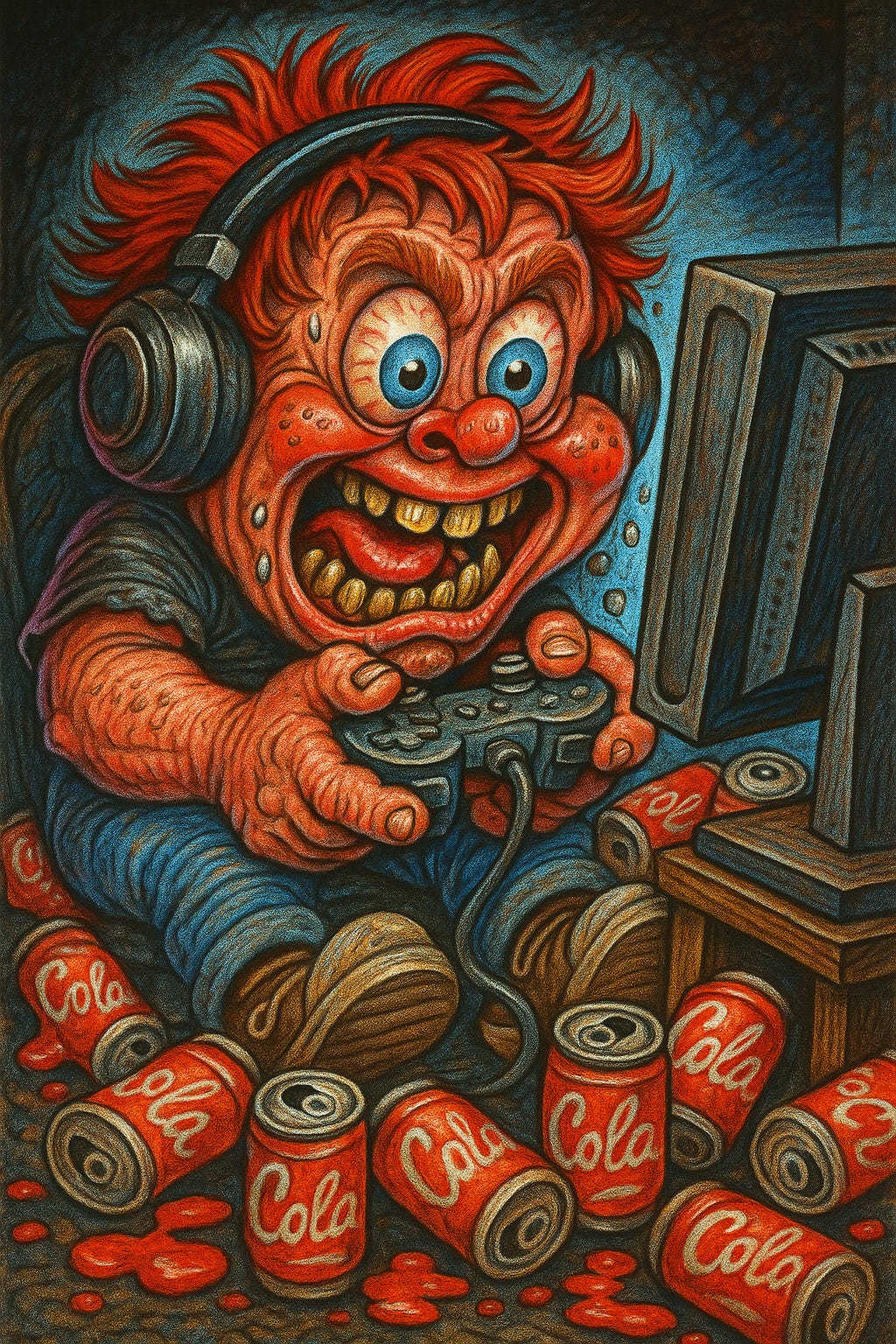
Hang on, this one is a tough one to talk about. There is no way I could lead off this article with this term. Goon, or Gooning has three terms. And your kids, when asked will ALWAYS tell you about the first two. But they usually mean the third.

a.) Gaming / Online grind culture.
In this context it means a trance-like state of hyperfocus (like zoning out while playing or scrolling endlessly). That’s the tame “obsessive but funny” meaning. If they are Gooning while playing Fortnite, it’s probably time to stop and get them outside for awhile

b.) Insult / Meme usage.
This context is primarily used to roast someone as pathetic, creepy, or socially awkward. Not cool. But putting others down is part of adolescence.

c. Sexual subculture (NSFW) – In certain corners of the internet, “gooning” refers to being stuck in a prolonged state of arousal, edging, or porn-fueled trance. The most prominent new meaning is related to compulsive or prolonged masturbation. Kids may know of it through meme crossover.
Currently there is a big trend on TikTok where college freshman move into their dorms and ask “Where am I supposed to goon?” Or “My freshman roommate is a constant gooner.” It doesn’t mean they are doing it (yes they are).

It mainly means they love having a dirty codeword to say in front of mom and dad. Just like we did with ‘Netflix and chill’ before we pretended it meant watching actual Netflix.

4. 6/7

The term “6/7” is a prime example of a modern, nonsensical meme that has become a widespread verbal tic. It’s the verbal version of bubble wrap, completely pointless, but irresistibly fun to pop in class.

  • Origin: The phrase originated from the song “Doot Doot (6 7)” by the rapper Skrilla. The numbers are repeated as a key part of the song.
    listen for yourself here (if you dare).

    Doot Doot by Skrilla

    Viral Spread: The song went viral on TikTok, and the phrase “6/7″ became heavily associated with NBA player LaMelo Ball, who is 6’7” tall. Video edits of him playing basketball with the song as a soundtrack popularized the term.
  • Meaning (or lack thereof): The core of the joke is that there is no deep meaning. The phrase is used for comedic, nonsensical effect. It can be shouted in a classroom, used in response to a question about a score (e.g., “What did you get on the test?” “6/7”), or simply used as a non sequitur.
  • Annoyance for Adults: For many adults, especially teachers, the phrase is simply annoying because it’s used to interrupt conversations and disrupt class. It’s a verbal meme that can be difficult to get rid of, similar to past trends like the “21” meme (a reference to rapper 21 Savage).

    With a little luck, this meme will die out quickly. Let the kids feel like they are getting away with something. Then they’ll move on.

5. Simp
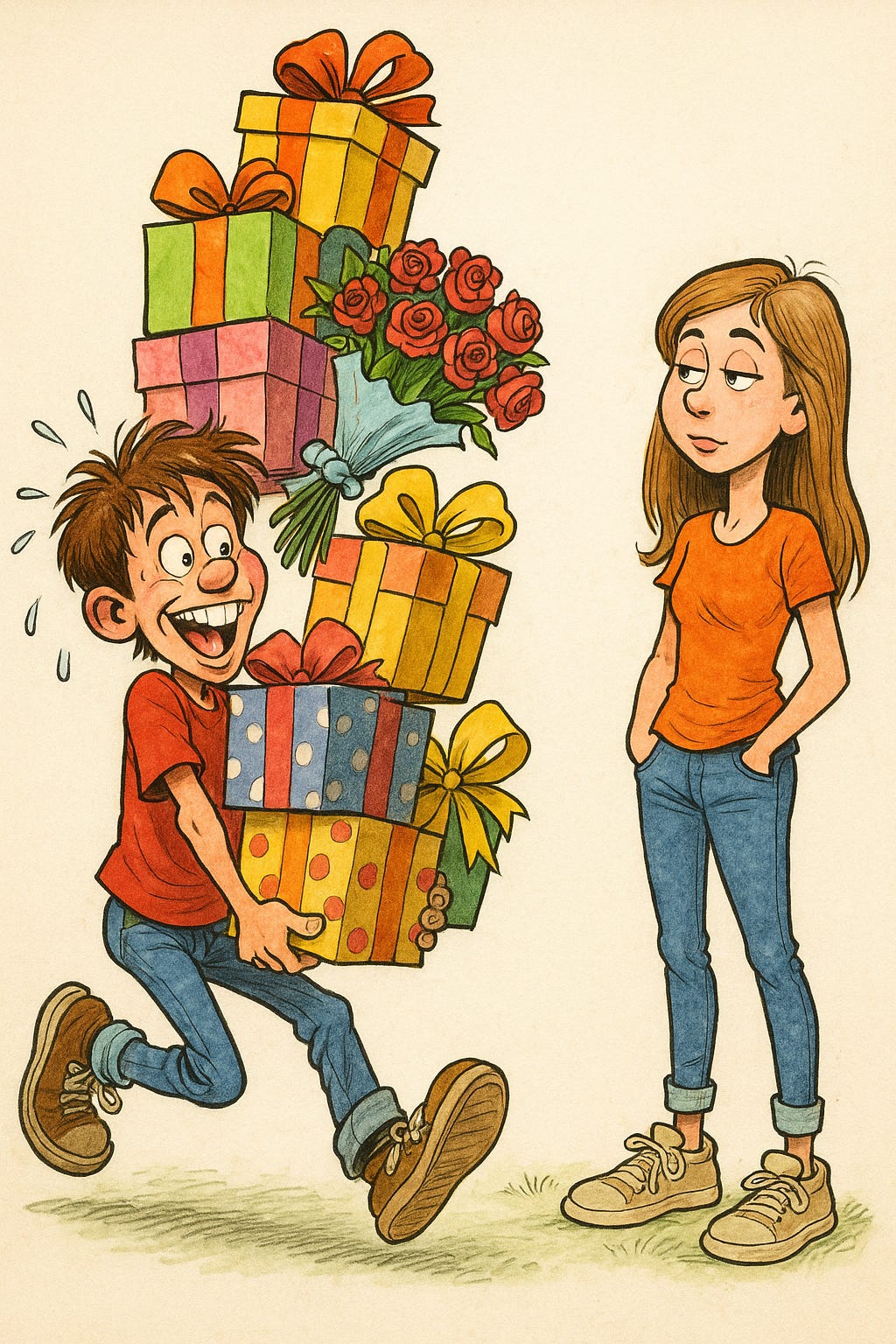
This is an insult for someone who is overly eager to please or subservient to another person, especially for a romantic interest. Back in our day, we just called this ‘being whipped.’ Now it’s got an acronym and a hashtag.

A SIMP is someone, usually male, who goes overboard with attention, flattery or gifts to someone they are attracted to. Boys can SIMP for girls. Girls can SIMP for boys. Kids even SIMP for celebrities or athletes.

The problem is that attention is often not returned. At its core, it’s about being seen as desperate or submissive in a one-sided crush.

”Man, he’s SIMPING for her bad.”


“He stayed up all night helping her study? Bro’s such a simp… respect

though.”

“He bought her Starbucks every day for a month and she won’t even text him back. What a simp.”

6. Gyatt (or GYATTT)
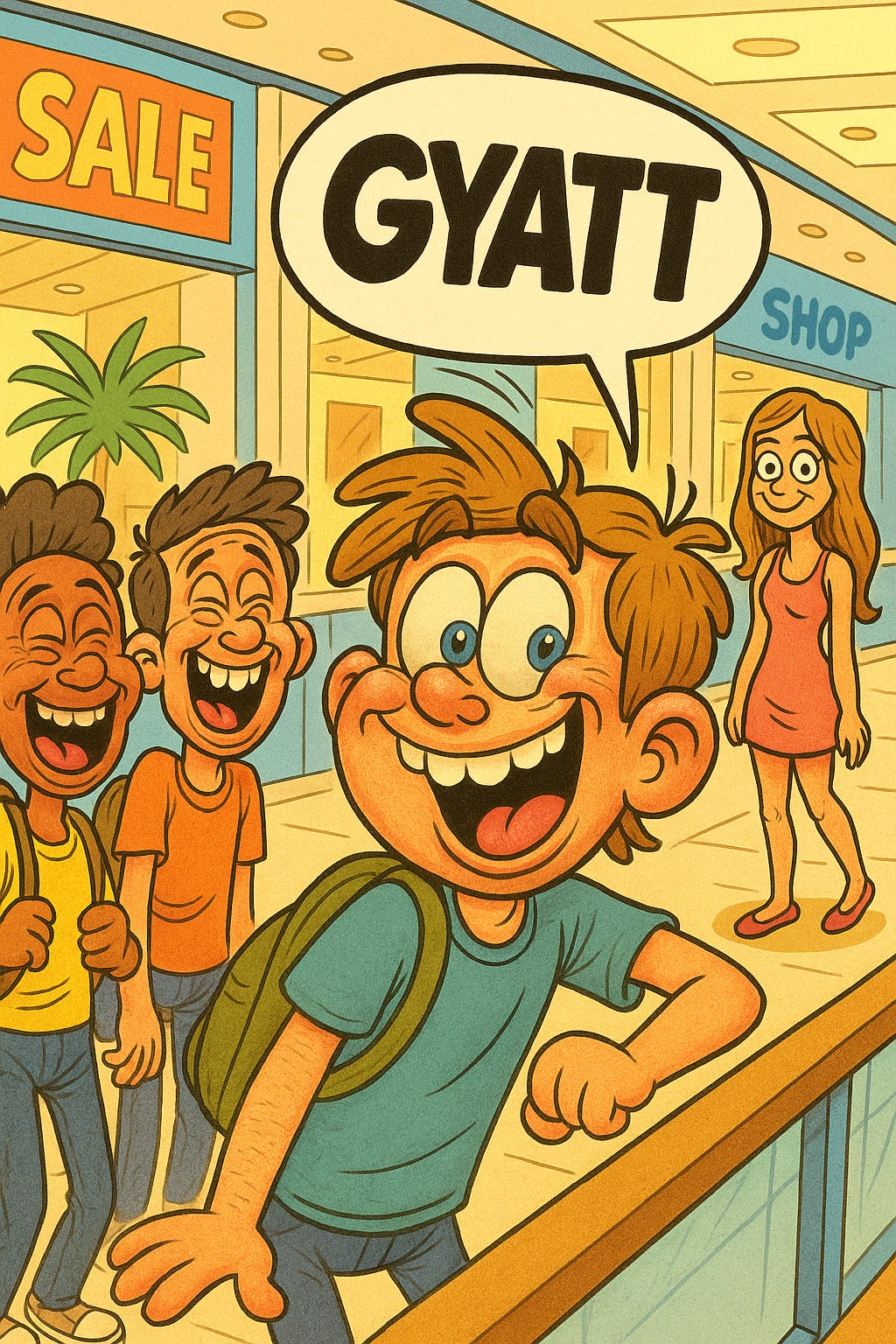
Imagine wolf-whistles had a Caps Lock key. That’s Gyatt.

This one’s pure internet-born hype. “Gyatt” is shorthand for “god damn”, usually blurted out when someone spots an attractive person with a curvy body. Think of it as the modern wolf-whistle, typed in all caps with too many T’s. Among friends, it’s exaggerated for comedy (“GYAAATTT, look at that burger!”), but at its core it’s sexual, objectifying, and not something you want to hear shouted across the dinner table. Pronounced like “gyatt”—refers (often humorously or admiringly) to someone, usually a woman, with a large, attractive backside.

Conclusion

Slang has always been the secret handshake of youth culture, we had ours, they have theirs. The difference now is that TikTok can turn gibberish into a global language overnight. You don’t need to memorize every word (please don’t start shouting “GYATT” at Thanksgiving), but knowing the basics gives you a fighting chance at dinner table translation. At the very least, you’ll understand when your kid calls you “brain rot”, and you’ll know whether to laugh, ground them, or both.



From Skibidi to SIMP, these are the words invading classrooms (and your dinner table). Learn them now, before your kids weaponize them against you.

It’s the most wonderful time of the year! The kids are out of the house and back in school. Whether it be middle school, elementary, high school or college, there will be a lot of learning happening.

Quite simply your kids will be coming home with a a lot of new terms and slang. And when they realize you don’t understand it, it will become their secret language.

So as a public service to all parents, here is a list of the top phrases and slang your kid will bringing home this year.

Good luck

1. Skibidi

This is a harmless nonsensical ter. It can be used for a variety of reasons. Usually it’s a a playful placeholder or to mean something cool, silly, or meaningless that evolved form online meme culture.

The term “skibidi” is a perfect example of how internet culture and memes create new slang that is completely divorced from real world language.

While it’s debated the one true origin of skibidi, most of the credit comes from The “Skibidi Toilet” Web Series. In early 2023, a YouTube animator named Alexey Gerasimov (DaFuq!? Boom!) created a short-form animated series called Skibidi Toilet. The series features an army of disembodied human heads popping out of toilets and singing the “skibidi” mashup as their battle cry. They are at war with another group of humanoids who have cameras, TVs, and speakers for heads.

It’s stupid, it’s gross, it’s immature. But hey, we had our stupid too; remember Garbage Pail Kids, Mad Magazine, and the entire existence of Carrot Top?

2. Brain Rot

The term “skibidi” and the Skibidi Toilet series are often cited as prime examples of “brain rot”. It simply means low-value, mindless, and nonsensical internet content that captivates the attention of young audiences. While brain rot content can be funny, innovative, relevant and creative, it is believed to “rot” their brains. That’s simply because the content is so shallow. There’s no challenge to consuming it.

It’s harmless, but watch the amount of consumption and time spent consuming. A good book usually clears this up ASAP. Or at least it did for us, back when our ‘brain rot’ was staring at a lava lamp for three hours straight.

3. Goon

Hang on, this one is a tough one to talk about. There is no way I could lead off this article with this term. Goon, or Gooning has three terms. And your kids, when asked will ALWAYS tell you about the first two. But they usually mean the third.

a.) Gaming / Online grind culture.
In this context it means a trance-like state of hyperfocus (like zoning out while playing or scrolling endlessly). That’s the tame “obsessive but funny” meaning. If they are Gooning while playing Fortnite, it’s probably time to stop and get them outside for awhile

b.) Insult / Meme usage.
This context is primarily used to roast someone as pathetic, creepy, or socially awkward. Not cool. But putting others down is part of adolescence.

c. Sexual subculture (NSFW) – In certain corners of the internet, “gooning” refers to being stuck in a prolonged state of arousal, edging, or porn-fueled trance. The most prominent new meaning is related to compulsive or prolonged masturbation. Kids may know of it through meme crossover.
Currently there is a big trend on TikTok where college freshman move into their dorms and ask “Where am I supposed to goon?” Or “My freshman roommate is a constant gooner.” It doesn’t mean they are doing it (yes they are).

It mainly means they love having a dirty codeword to say in front of mom and dad. Just like we did with ‘Netflix and chill’ before we pretended it meant watching actual Netflix.

4. 6/7

The term “6/7” is a prime example of a modern, nonsensical meme that has become a widespread verbal tic. It’s the verbal version of bubble wrap, completely pointless, but irresistibly fun to pop in class.

  • Origin: The phrase originated from the song “Doot Doot (6 7)” by the rapper Skrilla. The numbers are repeated as a key part of the song.
    listen for yourself here (if you dare).

    Doot Doot by Skrilla

    Viral Spread: The song went viral on TikTok, and the phrase “6/7″ became heavily associated with NBA player LaMelo Ball, who is 6’7” tall. Video edits of him playing basketball with the song as a soundtrack popularized the term.
  • Meaning (or lack thereof): The core of the joke is that there is no deep meaning. The phrase is used for comedic, nonsensical effect. It can be shouted in a classroom, used in response to a question about a score (e.g., “What did you get on the test?” “6/7”), or simply used as a non sequitur.
  • Annoyance for Adults: For many adults, especially teachers, the phrase is simply annoying because it’s used to interrupt conversations and disrupt class. It’s a verbal meme that can be difficult to get rid of, similar to past trends like the “21” meme (a reference to rapper 21 Savage).

    With a little luck, this meme will die out quickly. Let the kids feel like they are getting away with something. Then they’ll move on.

5. Simp

This is an insult for someone who is overly eager to please or subservient to another person, especially for a romantic interest. Back in our day, we just called this ‘being whipped.’ Now it’s got an acronym and a hashtag.

A SIMP is someone, usually male, who goes overboard with attention, flattery or gifts to someone they are attracted to. Boys can SIMP for girls. Girls can SIMP for boys. Kids even SIMP for celebrities or athletes.

The problem is that attention is often not returned. At its core, it’s about being seen as desperate or submissive in a one-sided crush.

”Man, he’s SIMPING for her bad.”


“He stayed up all night helping her study? Bro’s such a simp… respect

though.”

“He bought her Starbucks every day for a month and she won’t even text him back. What a simp.”

6. Gyatt (or GYATTT)

Imagine wolf-whistles had a Caps Lock key. That’s Gyatt.

This one’s pure internet-born hype. “Gyatt” is shorthand for “god damn”, usually blurted out when someone spots an attractive person with a curvy body. Think of it as the modern wolf-whistle, typed in all caps with too many T’s. Among friends, it’s exaggerated for comedy (“GYAAATTT, look at that burger!”), but at its core it’s sexual, objectifying, and not something you want to hear shouted across the dinner table. Pronounced like “gyatt”—refers (often humorously or admiringly) to someone, usually a woman, with a large, attractive backside.

Conclusion

Slang has always been the secret handshake of youth culture, we had ours, they have theirs. The difference now is that TikTok can turn gibberish into a global language overnight. You don’t need to memorize every word (please don’t start shouting “GYATT” at Thanksgiving), but knowing the basics gives you a fighting chance at dinner table translation. At the very least, you’ll understand when your kid calls you “brain rot”, and you’ll know whether to laugh, ground them, or both.

Leave a comment