Why Some Gyms and Fitness Influencers Are Recruiting Grounds for the Far-Right

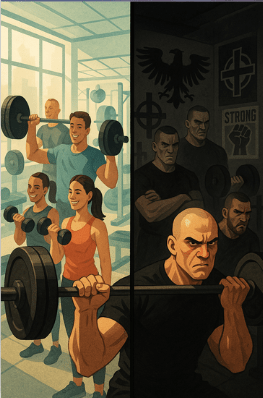
There’s a strange new movement happening at gyms and health clubs across the nation. I’m not talking about the newest Zumba craze or a new push/pull split regimen in the weight room. I’m talking philosophy, politics, and nationalism. Specifically, gyms and online fitness influencers are now hot recruiting grounds for spreading alt-right politics and red pill manosphere recruitment.

Gyms are supposed to be about sweat, protein farts, and avoiding eye contact with the guy moaning like he’s giving birth in the squat rack. But wander into the wrong weight room, or worse, the wrong corner of “gym bro” Instagram and Tik Tok, and suddenly you’re not just learning how to deadlift. You’re getting spoon-fed half-baked lectures about “Western masculinity,” “degeneracy,” and why soy is a government plot to neuter men.

The Aesthetic Trap

The alt-right sells young, impressionable, insecure lonely men an image: the ripped, stoic, square-jawed warrior. They don’t just want guys doing curls, they want guys to see themselves as ALPHA crusaders. They sell an image of success, being admired, and dominating their competition, especially women.

And let’s not act like this is new. Fascist movements have always been obsessed with the body. Mussolini flexed shirtless like he was auditioning for Jersey Shore: Rome Edition. Nazis ran elementary school fitness programs with the same enthusiasm they had for torchlit marches. Putin rides shirtless on horseback and is suddenly becomes an admired a role model. Modern extremists are remixing an old playbook with creatine powder. It’s a boy’s club echo chamber.

There is a growing body of evidence and reporting from journalists, researchers, and counter-extremist organizations that suggests a connection between certain segments of fitness culture and the alt-right and far-right extremist movements. While this is not a “pipeline” that affects everyone who goes to the gym, there are specific, concerning trends.

The Self-Improvement Hustle

Let’s be clear: self-improvement isn’t the problem. Want to drop 20 pounds? Cool. Want to bench your body weight? Respect. But extremist groups figured out long ago that gyms are ripe recruiting grounds. Why? Because everyone in there is already dealing with insecurities. “I’m not strong enough, I’m too scrawny, women don’t like me. I need to be ALPHA strong.”

Two weeks ago, New York Mayoral candidate Zohran Mamdani, a college graduate, was mocked by the right for bench pressing 135 pounds. He was mocked as a weak leader, and a BETA male. Weight rooms are all about the bragging rights. And Mamdani was prime fodder for putting Beta’s down and self inflating the ALPHA male affirmation.

Gym culture and Alt right movements share the themes of chasing discipline, strength, self determination and, belonging. It’s not a huge leap to twist that into “protecting your nation” or “fighting cultural decay.”

1. Reports from Anti-Hate and Counter-Extremism Organizations

Organizations that monitor extremist movements have been at the forefront of documenting this trend.

Counter Extremism Project (CEP): The CEP has characterized the Active Club network as a “transnational movement” that seeks to create a “shadow or stand-by army” for future violence. Their research highlights the rapid growth of these groups, noting that they are expanding faster than many other right-wing extremist networks.

Southern Poverty Law Center (SPLC): The SPLC has detailed the rise of “Active Clubs” and their founder, Robert Rundo. Their reporting outlines how these groups blend a hyper-masculine, “white nationalist” aesthetic with physical training and propaganda. The SPLC and others have also documented the direct links between these clubs and violent neo-Nazi groups like the Rise Above Movement (RAM).

Hope Not Hate: The UK-based anti-fascist organization has published reports and articles on what they call “fascist fitness.” Their analysis has identified a network of online chat groups on platforms like Telegram where far-right extremists use fitness and health content as a front for recruitment. They note how these groups frame “individual self-improvement as a part of a wider political struggle” and create a sense of community that can lead to radicalization.


How does it work? Here’s a breakdown of the key points:

1. “Active Clubs” and Extremist Recruitment

The most direct link is through groups known as “Active Clubs.” These are decentralized, white supremacist and neo-Nazi networks that use physical fitness, martial arts (like MMA and Brazilian Jiu-Jitsu), and hiking as a front for recruitment and radicalization.

  • Focus on Physicality: These groups emphasize intense physical training, often with strict fitness standards, to create a sense of discipline and brotherhood. They frame individual self-improvement as part of a larger “racial struggle” or “white resistance.”
  • Hiding in Plain Sight: By focusing on seemingly positive activities like working out, they can operate and recruit in public spaces, including regular gyms and parks, making them harder to identify and counter than traditional hate groups.
  • Building a “Shadow Militia”: Experts and law enforcement are concerned that these clubs are not just about fitness but are also about preparing for future violence. The training is a way to build a “shadow militia” of physically capable members ready for a perceived “race war.”
2. The Online Component

The “pipeline” often starts online, where fitness content is used as a gateway to more extreme ideologies.

  • Algorithmic Radicalization: Social media algorithms can lead users from mainstream fitness content to influencers who blend fitness advice with misogynistic, racist, and far-right ideologies.
  • Online “Fascist Fitness” Groups: Researchers have identified a network of online chat groups on platforms like Telegram, where fitness and health tips are used to lure in new members. Over time, the content becomes more overtly extremist, with members being encouraged to associate their physical progress with a hateful ideology.
  • Creating a “Tribe”: These online spaces offer a sense of community and belonging, which can be particularly appealing to young men who feel isolated or disenfranchised. This sense of “tribe” is a powerful tool for recruitment.

3. Ideological Alignment

There’s an ideological overlap between certain aspects of fitness culture and far-right thinking.

  • Focus on Strength and Masculinity: Both subcultures can emphasize a rugged, hyper-masculine ideal and a rejection of perceived societal “weakness.”
  • “Self-Improvement” as a Political Act: Extremist groups co-opt the concept of self-improvement and frame it as a political act. By becoming physically stronger, an individual is seen as contributing to the “survival” of their race or nation.
  • Anti-Woke Rhetoric: Some fitness influencers and communities adopt an anti-woke stance, which can be a gateway to more explicitly political and extremist content.
Scroll fitness TikTok or YouTube and you’ll notice a trend: influencers who start with “clean eating hacks” and “top 10 arm-day mistakes” and then, surprise!, slip in a rant about immigrants or “globalist elites.” That’s not an accident. That’s the hook.

Offline, it gets worse. Some gyms, MMA clubs, and fight schools are outright connected to extremist networks. They brand themselves as “men’s spaces” or “traditional training grounds,” which sounds noble until you notice the posters on the wall are less about hydration and more about “the Great Replacement.”

Dog Whistles in the Weight Room

Most of us ignore the weird banter at the gym. But some phrases and memes are more than jokes. Talk of “soy boys,” endless rants about “weak men,” or the casual use of coded numbers and symbols, those aren’t just locker room roasts. They’re signals. (More abut these in next week’s post)

The scary part? Most gymgoers don’t even notice. You’re too busy counting reps to realize your spotter is also counting down to “the collapse of Western civilization.”


Not All Gyms, But Enough

Before anyone freaks out: no, not every CrossFit box is secretly a Nazi clubhouse. Most gyms are just gyms. But enough of them have become recruiting hubs that pretending it’s not happening is willful ignorance.

If you’re a parent, and your son is suddenly parroting stuff he heard at the gym about “taking back masculinity,” maybe check in. He might be lifting weights. He might also be lifting conspiracy theories.


What We Can Do

The solution isn’t boycotting gyms. It’s awareness. It’s supporting trainers and communities who push strength without pushing hate. It’s recognizing that real strength has nothing to do with scapegoating women, immigrants, or anyone else.

Call it out. Laugh at it. Make it uncool. Because if there’s one thing extremist bros can’t handle, it’s being mocked while they’re flexing in the mirror.


Closing Punch

Fitness should build bodies, not break democracies. If your gym’s playlist includes conspiracy podcasts between sets, maybe it’s time to find a new squat rack.


Why Some Gyms and Fitness Influencers Are Recruiting Grounds for the Far-Right

There’s a strange new movement happening at gyms and health clubs across the nation. I’m not talking about the newest Zumba craze or a new push/pull split regimen in the weight room. I’m talking philosophy, politics, and nationalism. Specifically, gyms and online fitness influencers are now hot recruiting grounds for spreading alt-right politics and red pill manosphere recruitment.

Gyms are supposed to be about sweat, protein farts, and avoiding eye contact with the guy moaning like he’s giving birth in the squat rack. But wander into the wrong weight room, or worse, the wrong corner of “gym bro” Instagram and Tik Tok, and suddenly you’re not just learning how to deadlift. You’re getting spoon-fed half-baked lectures about “Western masculinity,” “degeneracy,” and why soy is a government plot to neuter men.

The Aesthetic Trap
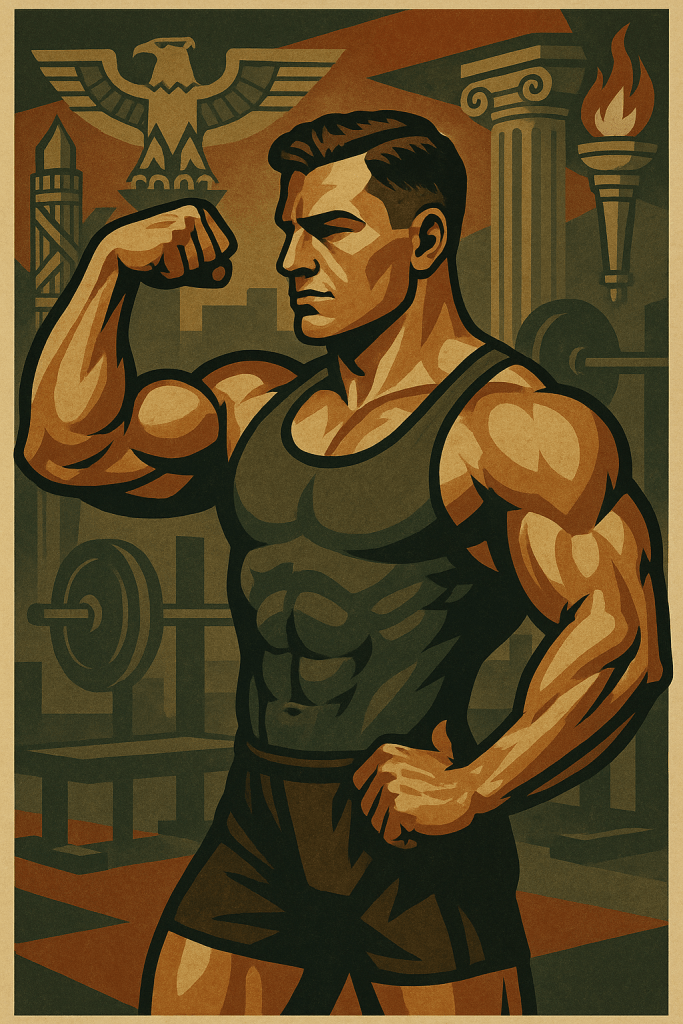
The alt-right sells young, impressionable, insecure lonely men an image: the ripped, stoic, square-jawed warrior. They don’t just want guys doing curls, they want guys to see themselves as ALPHA crusaders. They sell an image of success, being admired, and dominating their competition, especially women.

And let’s not act like this is new. Fascist movements have always been obsessed with the body. Mussolini flexed shirtless like he was auditioning for Jersey Shore: Rome Edition. Nazis ran elementary school fitness programs with the same enthusiasm they had for torchlit marches. Putin rides shirtless on horseback and is suddenly becomes an admired a role model. Modern extremists are remixing an old playbook with creatine powder. It’s a boy’s club echo chamber.

There is a growing body of evidence and reporting from journalists, researchers, and counter-extremist organizations that suggests a connection between certain segments of fitness culture and the alt-right and far-right extremist movements. While this is not a “pipeline” that affects everyone who goes to the gym, there are specific, concerning trends.

The Self-Improvement Hustle

Let’s be clear: self-improvement isn’t the problem. Want to drop 20 pounds? Cool. Want to bench your body weight? Respect. But extremist groups figured out long ago that gyms are ripe recruiting grounds. Why? Because everyone in there is already dealing with insecurities. “I’m not strong enough, I’m too scrawny, women don’t like me. I need to be ALPHA strong.”

Two weeks ago, New York Mayoral candidate Zohran Mamdani, a college graduate, was mocked by the right for bench pressing 135 pounds. He was mocked as a weak leader, and a BETA male. Weight rooms are all about the bragging rights. And Mamdani was prime fodder for putting Beta’s down and self inflating the ALPHA male affirmation.

Gym culture and Alt right movements share the themes of chasing discipline, strength, self determination and, belonging. It’s not a huge leap to twist that into “protecting your nation” or “fighting cultural decay.”

1. Reports from Anti-Hate and Counter-Extremism Organizations

Organizations that monitor extremist movements have been at the forefront of documenting this trend.

Counter Extremism Project (CEP): The CEP has characterized the Active Club network as a “transnational movement” that seeks to create a “shadow or stand-by army” for future violence. Their research highlights the rapid growth of these groups, noting that they are expanding faster than many other right-wing extremist networks.

Southern Poverty Law Center (SPLC): The SPLC has detailed the rise of “Active Clubs” and their founder, Robert Rundo. Their reporting outlines how these groups blend a hyper-masculine, “white nationalist” aesthetic with physical training and propaganda. The SPLC and others have also documented the direct links between these clubs and violent neo-Nazi groups like the Rise Above Movement (RAM).

Hope Not Hate: The UK-based anti-fascist organization has published reports and articles on what they call “fascist fitness.” Their analysis has identified a network of online chat groups on platforms like Telegram where far-right extremists use fitness and health content as a front for recruitment. They note how these groups frame “individual self-improvement as a part of a wider political struggle” and create a sense of community that can lead to radicalization.


How does it work? Here’s a breakdown of the key points:

1. “Active Clubs” and Extremist Recruitment

The most direct link is through groups known as “Active Clubs.” These are decentralized, white supremacist and neo-Nazi networks that use physical fitness, martial arts (like MMA and Brazilian Jiu-Jitsu), and hiking as a front for recruitment and radicalization.

  • Focus on Physicality: These groups emphasize intense physical training, often with strict fitness standards, to create a sense of discipline and brotherhood. They frame individual self-improvement as part of a larger “racial struggle” or “white resistance.”
  • Hiding in Plain Sight: By focusing on seemingly positive activities like working out, they can operate and recruit in public spaces, including regular gyms and parks, making them harder to identify and counter than traditional hate groups.
  • Building a “Shadow Militia”: Experts and law enforcement are concerned that these clubs are not just about fitness but are also about preparing for future violence. The training is a way to build a “shadow militia” of physically capable members ready for a perceived “race war.”
2. The Online Component

The “pipeline” often starts online, where fitness content is used as a gateway to more extreme ideologies.

  • Algorithmic Radicalization: Social media algorithms can lead users from mainstream fitness content to influencers who blend fitness advice with misogynistic, racist, and far-right ideologies.
  • Online “Fascist Fitness” Groups: Researchers have identified a network of online chat groups on platforms like Telegram, where fitness and health tips are used to lure in new members. Over time, the content becomes more overtly extremist, with members being encouraged to associate their physical progress with a hateful ideology.
  • Creating a “Tribe”: These online spaces offer a sense of community and belonging, which can be particularly appealing to young men who feel isolated or disenfranchised. This sense of “tribe” is a powerful tool for recruitment.

3. Ideological Alignment

There’s an ideological overlap between certain aspects of fitness culture and far-right thinking.

  • Focus on Strength and Masculinity: Both subcultures can emphasize a rugged, hyper-masculine ideal and a rejection of perceived societal “weakness.”
  • “Self-Improvement” as a Political Act: Extremist groups co-opt the concept of self-improvement and frame it as a political act. By becoming physically stronger, an individual is seen as contributing to the “survival” of their race or nation.
  • Anti-Woke Rhetoric: Some fitness influencers and communities adopt an anti-woke stance, which can be a gateway to more explicitly political and extremist content.
Scroll fitness TikTok or YouTube and you’ll notice a trend: influencers who start with “clean eating hacks” and “top 10 arm-day mistakes” and then, surprise!, slip in a rant about immigrants or “globalist elites.” That’s not an accident. That’s the hook.

Offline, it gets worse. Some gyms, MMA clubs, and fight schools are outright connected to extremist networks. They brand themselves as “men’s spaces” or “traditional training grounds,” which sounds noble until you notice the posters on the wall are less about hydration and more about “the Great Replacement.”

Dog Whistles in the Weight Room

Most of us ignore the weird banter at the gym. But some phrases and memes are more than jokes. Talk of “soy boys,” endless rants about “weak men,” or the casual use of coded numbers and symbols, those aren’t just locker room roasts. They’re signals. (More abut these in next week’s post)

The scary part? Most gymgoers don’t even notice. You’re too busy counting reps to realize your spotter is also counting down to “the collapse of Western civilization.”


Not All Gyms, But Enough

Before anyone freaks out: no, not every CrossFit box is secretly a Nazi clubhouse. Most gyms are just gyms. But enough of them have become recruiting hubs that pretending it’s not happening is willful ignorance.

If you’re a parent, and your son is suddenly parroting stuff he heard at the gym about “taking back masculinity,” maybe check in. He might be lifting weights. He might also be lifting conspiracy theories.


What We Can Do

The solution isn’t boycotting gyms. It’s awareness. It’s supporting trainers and communities who push strength without pushing hate. It’s recognizing that real strength has nothing to do with scapegoating women, immigrants, or anyone else.

Call it out. Laugh at it. Make it uncool. Because if there’s one thing extremist bros can’t handle, it’s being mocked while they’re flexing in the mirror.


Closing Punch

Fitness should build bodies, not break democracies. If your gym’s playlist includes conspiracy podcasts between sets, maybe it’s time to find a new squat rack.


Leave a comment