
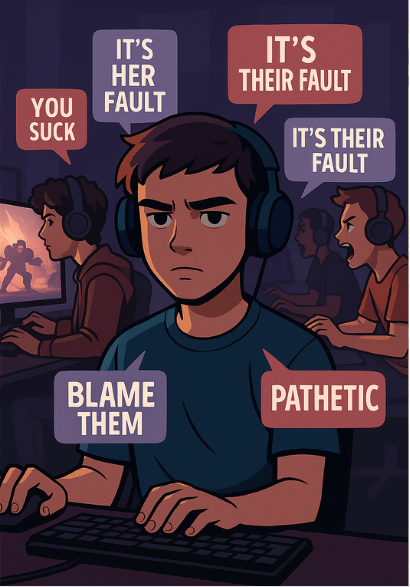
From Helldivers 2 to ROBLOX to online echo chambers, here’s how parents can spot the warning signs of incel culture and raise resilient, confident boys.
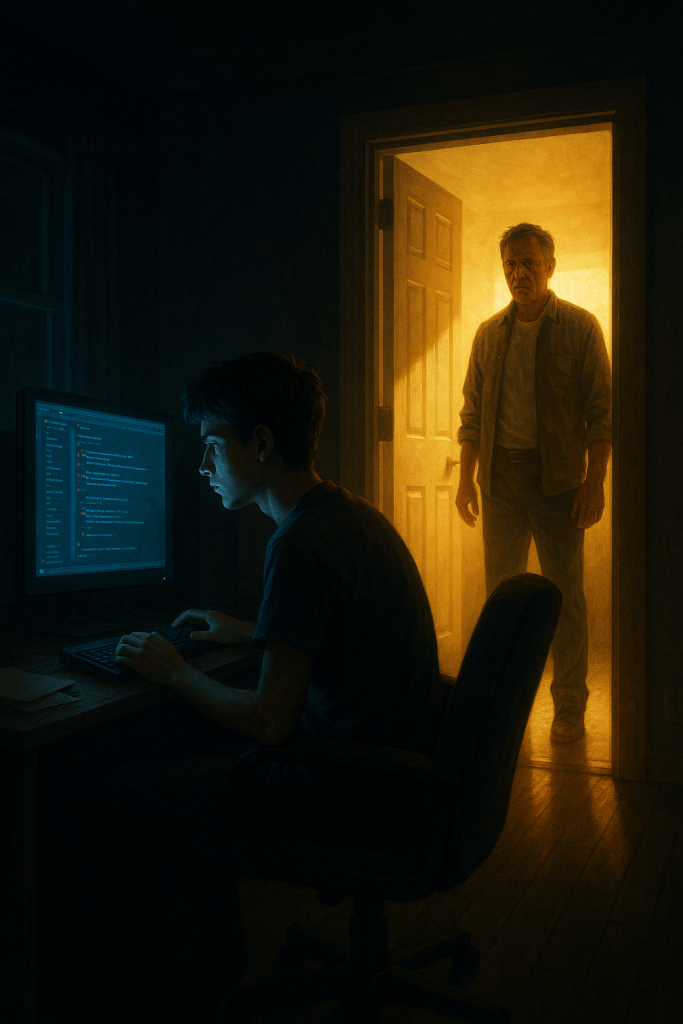
When my son was born, I knew we had adventure ahead of us that would be filled with joyful highs and crushing lows. I never expected it to be easy. I always wanted to be a fun dad.
But I also drew the line. I am not his friend. I am his dad.
When he was born I knew I would one day have to talk to him about grades, curfews, even sex, and drugs. And I promised we would talk about those things openly and honestly. I promised I’d be open with my own experiences. So when I talked to him about these things, my advice would come from an honest, credible place.
But now there’s a new parental nightmare that none of us have experienced. And it comes from a world that seems normal to kids, but is completely foreign to parents. This new nightmare we need to talk about is our kids getting radicalized by some online performance-outrage Wizard of Oz that knows exactly how to reach your kid and unwind everything you’ve been teaching them.
As a parent of a teen boy, I’m less worried about vices we experienced like teen smoking, alcohol abuse, driving too fast or getting to first base too young. The real threat that should be keeping parents awake at night is the rise of the incel movement, a world of angry, isolated young men who blame women for their problems and bond online over resentment, misogyny, conspiracy theories and violent solutions to their problems.
And it’s not just sad memes anymore. This stuff has been linked to harassment, radicalization, and in extreme cases, real-world violence. Which means moms and dads can’t shrug it off. We need to deal with it, directly, and openly.
What Is the Incel Movement, Really?
So what actually is the “incel movement?” “Incel” stands for involuntary celibate. The term got popular in some pretty dark corners of the internet (and yes, the alt-right and folks like Steve Bannon helped push it). It’s become shorthand for young guys who struggle with dating, avoid responsibility, and spend way too much time online blaming everyone else for their problems. Sound like any teenager you know? That’s the trick, these groups prey on normal young teen men insecurities, then turn them toxic. Incels are usually defined as men who:
- Don’t date, or don’t know how.
- Refuse to take responsibility for their lives.
- Blame women, society, or “the system” for everything wrong with them.
- Spend way too much time online talking about it.
That could easily describe ANY teen in the world. But the alt right uses that insecurity and gives young men permission and forums to blame others for this anxiety. And then the downward spiral begins. And your son is sucked into a breeding ground for bitterness that morphs into toxic masculinity, hate groups, or worse.
We like to think of incels as fat, cranky loners with bad hygiene in black heavy metal t-shirts. But that’s us as parents stereotyping. That’s us in denial. That’s us saying: “My kid isn’t one of those losers. My kid hits the gym four days a week.” But in reality, an incel can be, and most likely is, the nice boy next door. The boy who killed Charlie Kirk looks like he could have been on your son’s cross country team.
Warning Signs Your Kid Might Be Slipping Toward Incel Culture

Parents don’t get push notifications when our kids join slip onto the dark areas where alt right recruiting happens. Again, we like to be in denial: “My kid doesn’t go on the “dark web” he stays in safe places like online games or Roblox. I’ve got news for you. Our son’s don’t go looking for places to get radicalized. Radical groups look for and FIND THEM; at the gym, in online games, in ROBLOX, on Reddit, X and YouTube.
But there are red flags you can look for to determine if your son is being targeted. :
- Withdrawal:
If your son is pulling away from friends and family, suddenly spending most of his time locked in his room, he’s talking tom someone on line that is telling encouraging him to pull away. Separation is key. What are they telling him? Anything he wants to hear. Girls are the problem, immigrants are the problem, education is indoctrination. They coddle him and agree with him and tell him what he wants to hear. - Language shifts:
Joking about women being “hypergamous,” or throwing around terms like “black pill” or “Stacy vs. Chad.” If your kid is using speaking in code around you, he’s sending you a signal. He’s telling you “I’m smarter than you and I know mare than you. I don’t need you.” Who’s encouraging that behavior? His online friends that never reprimand him. - Digital obsession:
Living in online spaces that feel more “real” than real life.
Social media, chat rooms (especially in online games), Reddit, YouTube allow content makers to post perfectly curated worlds of perfection. “Girls love me online!” In ROBLOX a 14 year old boy, by form of an avatar, can take a virtual shower with a virtual 14 year old girl and not face ANY repercussions. In the online world they are considered a stud. But in the real world they are considered creepy. Guess where your son will retreat to for self image boosting? And the alt right knows this. - Hostile humor:
Dismissing women, mocking feminism, or parroting misogynistic influencers.
Let’s face it, dating and relationships are hard. And it’s exponentially harder when you are a teen boy with a face filled with zits and uncontrollable BO. In the real world you’re mocked. In your online world nobody knows the real you. So you become an ALPHA MALE vanquishing your enemies and women who don’t worship you. And the alt right lifts you up in doing so.
- Loss of interests:
Dropping sports, music, or hobbies for endless scrolling or gaming marathons.
Here’s a key red flag. Your son is dropping out of the real world, where there is competition, adversity and conflict and dropping into an easy online world where anybody will tell them what they want to hear; “Women are the problem, not you. Immigrants are the problem, not you.”
We don’t need advanced training to spot these changes. We just need to pay attention, be involved, and not be afraid to call out weirdness when we see it.
Helldivers 2: A Case Study in Gaming and Radicalization Risks
Let’s talk about Helldivers 2. On paper, it’s just a fun co-op shooter where you and your buddies blow up space bugs in the name of “managed democracy.” For most players, that’s all it is: a good time with friends.
But recently, one of the game’s “inside jokes”, a simple button combo for dropping a bomb, showed up scratched onto bullet casings used in a Charlie Kirk’s politically motivated shooting. That doesn’t mean Helldivers 2 is secretly a radicalization simulator. It means pop culture symbols get hijacked, the same way Pepe the Frog went from stoner comic strip to alt-right mascot.
Here’s the parental lesson: games aren’t just games anymore. They’re communities, symbols, and memes. They are SECRET places to belong and get your ego boosted. Some are harmless. Others get twisted. The danger isn’t Helldivers 2 itself. The danger is when satire turns serious, when jokes about the game’s “managed democracy” become talking points for the real world, and when the Discord servers pivot from bug-slaying to woman-hating.
Gaming-related warning signs to watch for:
- Quoting game codes or slogans like political scripture.
- Loving the authoritarian vibe more than the actual gameplay.
- Friend circles drifting into edgy, misogynistic online spaces.
- Treating the game less like fun and more like identity.
The fix isn’t banning games. That just makes kids sneakier. The fix is teaching them to separate satire from sincerity, memes from meaning. To ask why some people hijack symbols, and how not to fall for it.
Social Circles Shape the Risk

Here’s the thing: kids rarely radicalize alone. They radicalize in groups, even if those groups are just text chats and gaming headsets.
If your son’s best buddies are on a healthy mix of sports teams, clubs, or even just goofing off at the skate park, he’s less likely to spiral. If his “community” is three anonymous screen names who only talk about hating women, you’ve got a problem.
Encourage offline friendships. Encourage mixed-gender activities. Encourage anything that keeps him from defining himself in opposition to the world.
Parenting Tips to Prevent Incel Radicalization
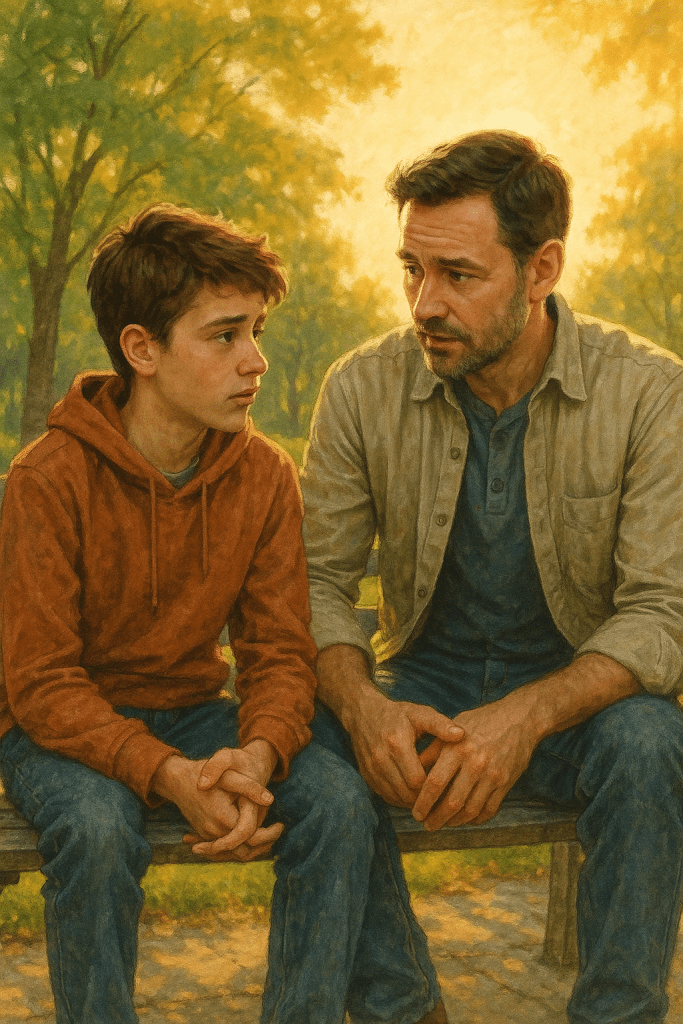
Here’s where we roll up our sleeves:
- Model healthy masculinity
Dads, we need to show our boys that manhood isn’t about anger or dominance.
Moms, show them respect and boundaries.
Together, demonstrate that healthy relationships exist. - Normalize rejection
Make them go to the school dance, Friday night football games or any other social events! Make them get out there. The old ways need to be cast aside. A group of boys (or girls) can go together to just have fun.
Teach them early: not every crush will say yes. It’s not the end of the world. The right response is to move on, not spiral into hate. - Talk about feelings without mockery
If “suck it up” is your only advice, you’re outsourcing your kid’s emotional education to the likes of Andrew Tate, Charlie Kirk and Nick Fuentes. They’ll tell him what he want’s to hear. And he won’t need you anymore. - Pay attention to media diets
Games and YouTube are fine, but know what’s on the menu. If it’s all rage-bait and manosphere podcasts, intervene. Don’t just look at what they are playing, get in there and play with them. Experience what they are experiencing. The results may shock you. If it does, remember you re not their friend, you’re their parent and have the responsibility to take action. - Engage often, Engage early, Intervene often, Intervene early
Don’t wait until your kid is parroting Reddit threads about “femoids.” Ask questions. Make them defend their views. Don’t let the basement be the loudest voice in their life. And if their answers cause you any concern, it’s your responsibility to step in.
The Bottom Line: How We Stop the Incel Movement
Stopping the incel movement isn’t about government bans, censorship, or locking kids out of their Xboxes. It’s about connection. It’s about parents raising boys who can take a “no,” can respect women, and live in the real world outside the online echo chamber.
Monitor lights off. Sunlight on.
That’s how we stop it.




 DAD BOD WEEKLY