Fraud is fake. The threat is real: millions of votes lost.

This isn’t about imaginary fraud.
It’s about real people.
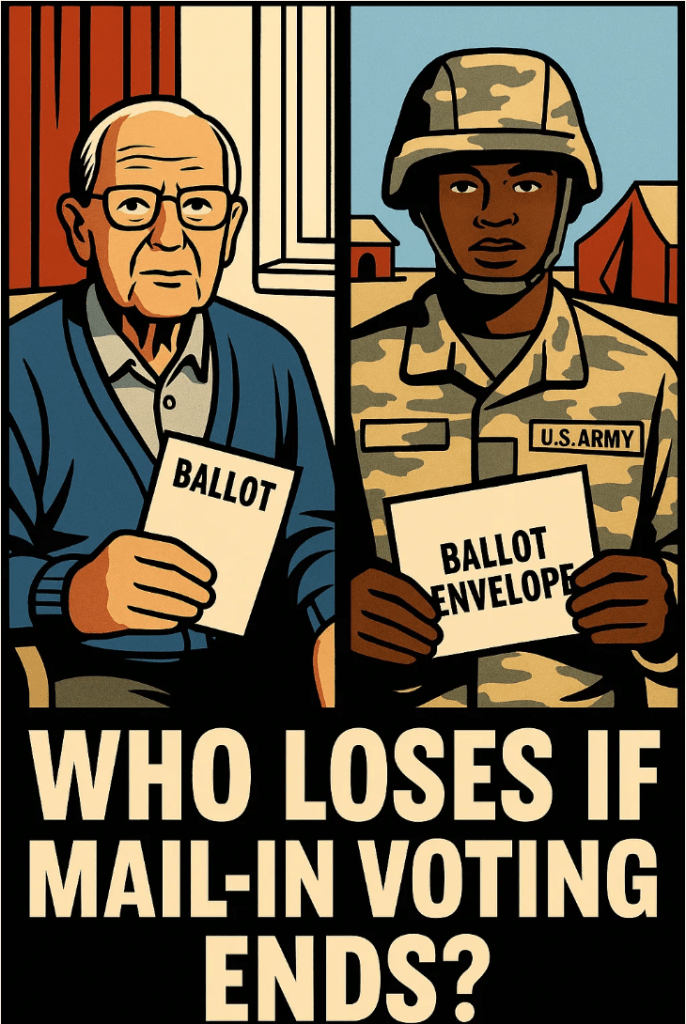
It’s about seniors, soldiers, and working parents.

The conversation around voting in America has become increasingly focused on one inflammatory topic: mail-in voting. Republicans continually make false arguments about its security and integrity. NONE of the republican claims of voter fraud have been proven true. It’s all bullshit.

But the more pressing question for voters is what happens if it’s eliminated.

Taking away mail in voting would not be a neutral act; it would fundamentally alter who can and will participate in our elections. That’s fascism.

So, who would be most affected by such a change? If the Trump administration kills mail-in voting, the headlines will call it “election reform.” But strip away the spin and the reality is blunt: millions of Americans, our neighbors, our parents, maybe even you, will suddenly face higher hurdles to cast a ballot.

This isn’t speculation. The numbers already tell the story.

Who Uses Mail-In Voting the Most?

  • SENIORS AND PEOPLE WITH DISABILITIES

    In 2020, nearly half of voters over 65 relied on vote-by-mail. Many can’t drive, stand in line for hours, or risk exposure to illness just to exercise their rights. For many older Americans and those with disabilities, mail-in voting is not a convenience, it’s a necessity. Mobility issues, chronic illness, and a lack of transportation can make the simple act of getting to a polling place an insurmountable barrier. The ability to fill out a ballot at home, in their own time and comfort, ensures that these citizens are not disenfranchised. The elimination of mail-in voting would force many to choose between their health and their right to vote, or to simply not vote at all.
  • MILITARY AND OVERSEAS VOTERS
    Hundreds of thousands of active-duty service members, and their families, vote absentee. Remove mail-in ballots, and you silence the very people defending democracy. Our service members stationed abroad and other U.S. citizens living overseas rely heavily on absentee ballots sent by mail. While a federal law, the Uniformed and Overseas Citizens Absentee Voting Act (UOCAVA), exists to protect their right to vote, the process is already complicated and prone to delays. Ending mail-in voting would add layers of logistical challenges, creating a significant risk that their ballots would not be cast or, worse, not counted. This would be a profound irony: denying a fundamental right to those who are serving to protect our country.
  • WORKING PARENTS AND LOW INCOME VOTERS
    If you’re juggling two jobs or don’t have childcare, “just go vote in person” isn’t an option. Mail-in ballots level the playing field for those who can’t afford to lose a day’s pay.

    Election Day is a national holiday for some, but for many working Americans, it’s just another Tuesday. Taking time off to vote can mean lost wages, and long lines at polling places only compound the issue. For a single parent juggling multiple jobs, or an hourly worker who can’t afford to lose a shift, in-person voting can feel like an impossible burden. Mail-in voting provides the flexibility to vote on their own schedule, without sacrificing their livelihood. Its absence would create a de facto poll tax on the most economically vulnerable.
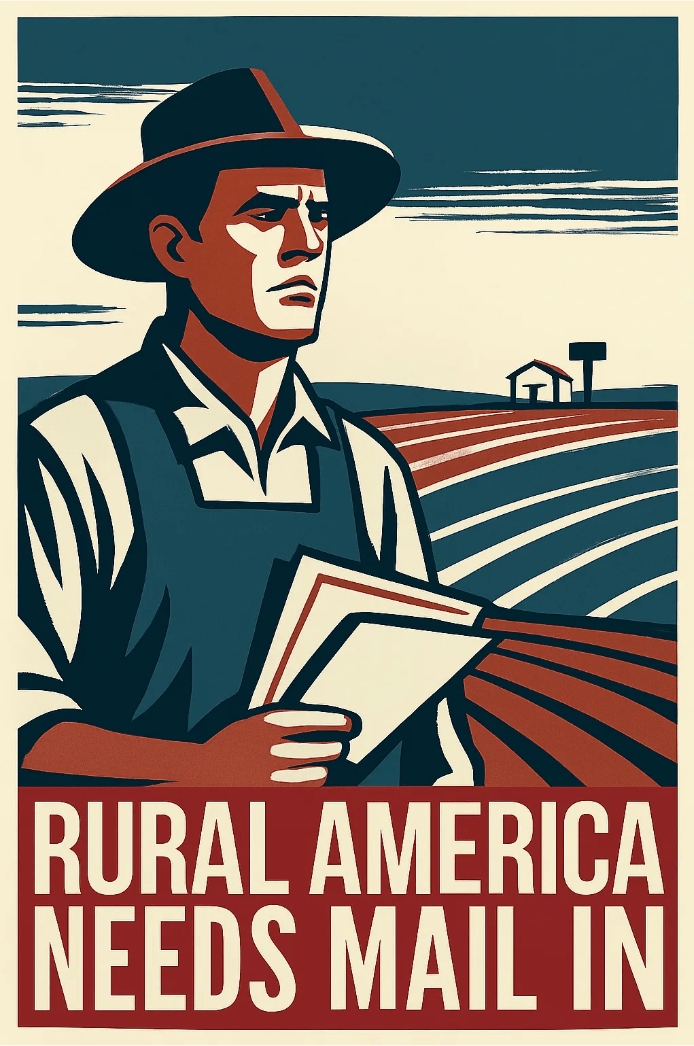
  • RURAL AMERICANS
    Ironically, many of the counties that lean most conservative are also the hardest hit. If the nearest polling place is 40 miles away, no-excuse absentee ballots are a lifeline.

    In vast rural areas, polling places can be few and far between. A voter might have to travel dozens of miles, taking time off work and paying for gas, just to cast a ballot. For those with limited income, time, or access to transportation, this can be a major deterrent. Mail-in voting has been a lifeline for these communities, allowing them to participate in elections without the high cost of travel. Removing it would effectively silence a significant portion of the rural electorate

What Happens Without Mail-In Voting?

Let’s put it in real terms:

  • An 82-year-old veteran in a nursing home who has voted in every election since Eisenhower? He’s done.
  • A single mom in Georgia who works a night shift and can’t wait three hours in line? Her vote is gone.
  • A Marine serving overseas? Forgotten.
  • A farmer in Nebraska whose polling site was consolidated into a county seat an hour away? Silenced.

This isn’t democracy tightening rules, it’s democracy slamming the door on its own citizens.


The Warning We Need to Hear

Supporters of eliminating mail-in voting say it’s about “election integrity.” But what’s more dangerous, imaginary fraud claims, or millions of legal votes never being cast?

The data makes it clear: cutting off mail-in voting won’t stop fraud (there’s no evidence it’s widespread). What it will do is stop Americans, young, old, rich, poor, red, and blue, from having their voices heard.

And that’s the point. Because when fewer people vote, the system tilts. Power calcifies. Your voice—our voices—fade.


The Challenge

The push to end mail-in voting is often framed as a way to secure our elections. However, the data consistently shows that voter fraud is exceedingly rare. What is far more likely is that restricting voting options will lead to a dramatic decrease in voter turnout, disproportionately affecting the very people who already face the most barriers to the ballot box.

Our democracy is strongest when more people participate, not fewer. When we remove a proven method of voting that has served millions, we are not strengthening our system; we are weakening it. The consequence is not just a change in procedure, but a potential loss of voice for some of the most vulnerable members of our society. This is a warning we must take seriously.


Fraud is fake. The threat is real: millions of votes lost.
This isn’t about imaginary fraud.
It’s about real people.
It’s about seniors, soldiers, and working parents.

The conversation around voting in America has become increasingly focused on one inflammatory topic: mail-in voting. Republicans continually make false arguments about its security and integrity. NONE of the republican claims of voter fraud have been proven true. It’s all bullshit.

But the more pressing question for voters is what happens if it’s eliminated.

Taking away mail in voting would not be a neutral act; it would fundamentally alter who can and will participate in our elections. That’s fascism.

So, who would be most affected by such a change? If the Trump administration kills mail-in voting, the headlines will call it “election reform.” But strip away the spin and the reality is blunt: millions of Americans, our neighbors, our parents, maybe even you, will suddenly face higher hurdles to cast a ballot.

This isn’t speculation. The numbers already tell the story.

Who Uses Mail-In Voting the Most?

  • SENIORS AND PEOPLE WITH DISABILITIES

    In 2020, nearly half of voters over 65 relied on vote-by-mail. Many can’t drive, stand in line for hours, or risk exposure to illness just to exercise their rights. For many older Americans and those with disabilities, mail-in voting is not a convenience, it’s a necessity. Mobility issues, chronic illness, and a lack of transportation can make the simple act of getting to a polling place an insurmountable barrier. The ability to fill out a ballot at home, in their own time and comfort, ensures that these citizens are not disenfranchised. The elimination of mail-in voting would force many to choose between their health and their right to vote, or to simply not vote at all.
  • MILITARY AND OVERSEAS VOTERS
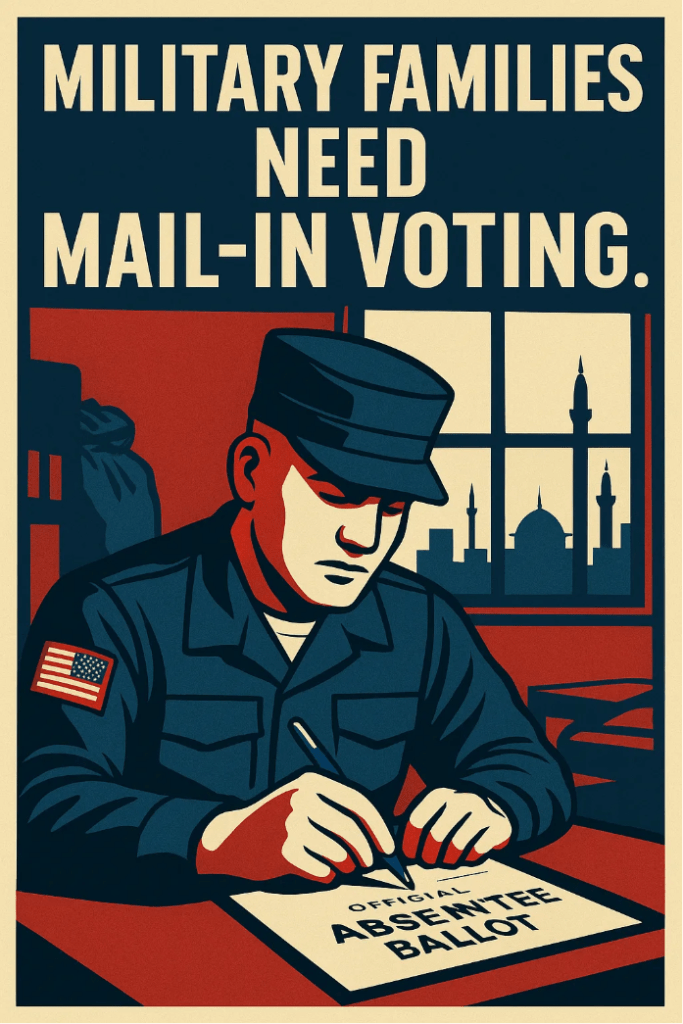
    Hundreds of thousands of active-duty service members, and their families, vote absentee. Remove mail-in ballots, and you silence the very people defending democracy. Our service members stationed abroad and other U.S. citizens living overseas rely heavily on absentee ballots sent by mail. While a federal law, the Uniformed and Overseas Citizens Absentee Voting Act (UOCAVA), exists to protect their right to vote, the process is already complicated and prone to delays. Ending mail-in voting would add layers of logistical challenges, creating a significant risk that their ballots would not be cast or, worse, not counted. This would be a profound irony: denying a fundamental right to those who are serving to protect our country.
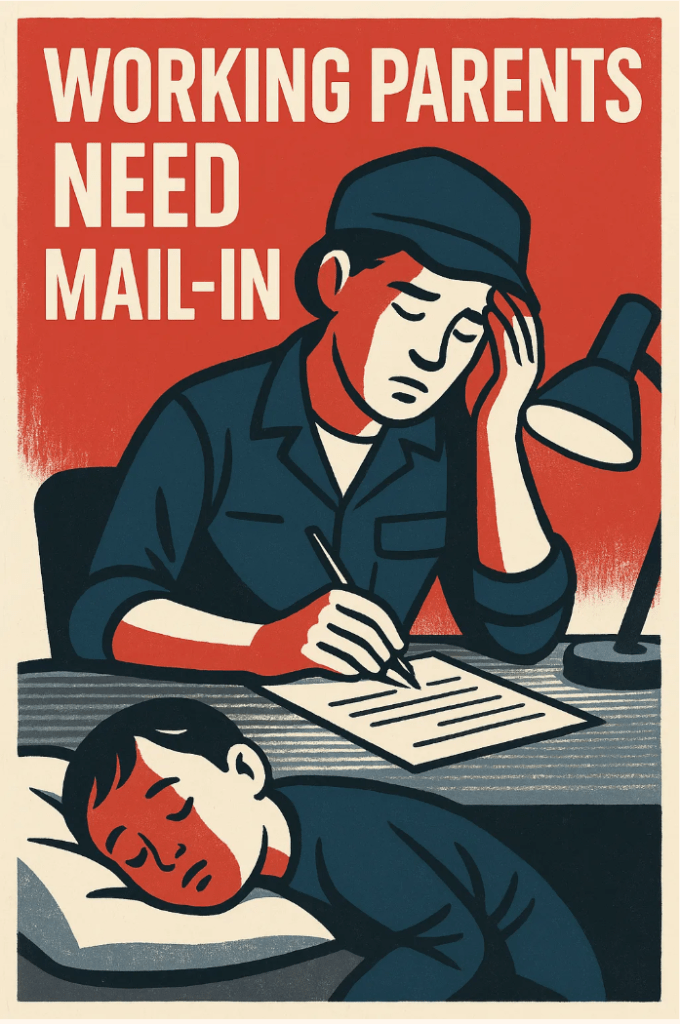
  • WORKING PARENTS AND LOW INCOME VOTERS
    If you’re juggling two jobs or don’t have childcare, “just go vote in person” isn’t an option. Mail-in ballots level the playing field for those who can’t afford to lose a day’s pay.

    Election Day is a national holiday for some, but for many working Americans, it’s just another Tuesday. Taking time off to vote can mean lost wages, and long lines at polling places only compound the issue. For a single parent juggling multiple jobs, or an hourly worker who can’t afford to lose a shift, in-person voting can feel like an impossible burden. Mail-in voting provides the flexibility to vote on their own schedule, without sacrificing their livelihood. Its absence would create a de facto poll tax on the most economically vulnerable.
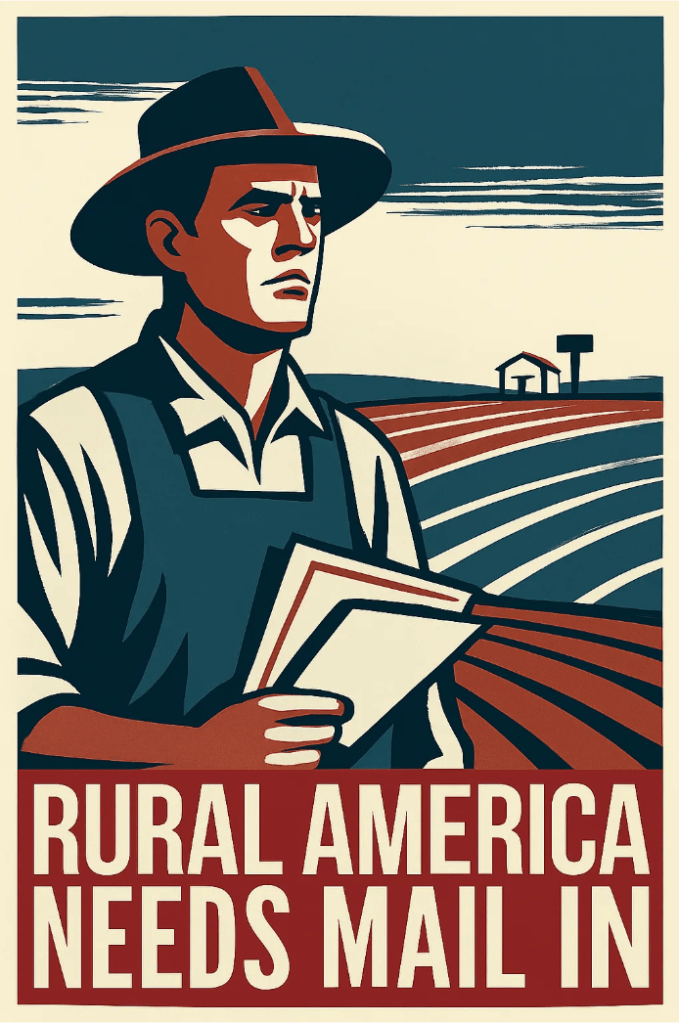
  • RURAL AMERICANS
    Ironically, many of the counties that lean most conservative are also the hardest hit. If the nearest polling place is 40 miles away, no-excuse absentee ballots are a lifeline.

    In vast rural areas, polling places can be few and far between. A voter might have to travel dozens of miles, taking time off work and paying for gas, just to cast a ballot. For those with limited income, time, or access to transportation, this can be a major deterrent. Mail-in voting has been a lifeline for these communities, allowing them to participate in elections without the high cost of travel. Removing it would effectively silence a significant portion of the rural electorate

What Happens Without Mail-In Voting?

Let’s put it in real terms:

  • An 82-year-old veteran in a nursing home who has voted in every election since Eisenhower? He’s done.
  • A single mom in Georgia who works a night shift and can’t wait three hours in line? Her vote is gone.
  • A Marine serving overseas? Forgotten.
  • A farmer in Nebraska whose polling site was consolidated into a county seat an hour away? Silenced.

This isn’t democracy tightening rules, it’s democracy slamming the door on its own citizens.


The Warning We Need to Hear

Supporters of eliminating mail-in voting say it’s about “election integrity.” But what’s more dangerous, imaginary fraud claims, or millions of legal votes never being cast?

The data makes it clear: cutting off mail-in voting won’t stop fraud (there’s no evidence it’s widespread). What it will do is stop Americans, young, old, rich, poor, red, and blue, from having their voices heard.

And that’s the point. Because when fewer people vote, the system tilts. Power calcifies. Your voice—our voices—fade.


The Challenge

The push to end mail-in voting is often framed as a way to secure our elections. However, the data consistently shows that voter fraud is exceedingly rare. What is far more likely is that restricting voting options will lead to a dramatic decrease in voter turnout, disproportionately affecting the very people who already face the most barriers to the ballot box.

Our democracy is strongest when more people participate, not fewer. When we remove a proven method of voting that has served millions, we are not strengthening our system; we are weakening it. The consequence is not just a change in procedure, but a potential loss of voice for some of the most vulnerable members of our society. This is a warning we must take seriously.


Leave a comment