
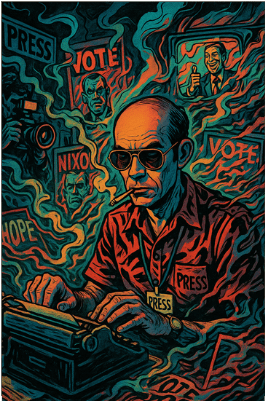
Illustration of Hunter S. Thompson at a typewriter surrounded by chaotic political imagery and media symbols.

Why a drug-fueled, brutally honest journalist remains one of the best teachers of critical thinking, skepticism, and media literacy for Gen Z.

Part 6 in our series, A Curriculum of Dissent 

Illustration of Hunter S. Thompson at a typewriter surrounded by chaotic political imagery and media symbols.

In our Curriculum of Dissent series, we explored The Great Gatsby and one man’s obsession with image, false love, and his fatal downfall when authenticity, decency, and empathy are replaced by the chase for status, image, and greed. (Click here to read that post) 

In Brave New World, we explored the dangers to our kids as governments and corporations use pleasure as a means of control, distraction to discourage deep critical thinking, and the death of the individual. (Click here to read that post) 

In The Catcher in the Rye, we explored Holden Caulfield’s search for empathy and how his search is still very important and relevant to our kids’ lives today. (Click here to read that post) 

Now, in this part of the series, we turn to the writing of Hunter S. Thompson, especially his fiercely honest look at American politics in Fear and Loathing on the Campaign Trail ’72.

Why does Thompson matter for the next generation?  
Thompson delivered several distinct themes to his writings.  

First, he refused to accept the status quo.  
He warned us of the modern media landscape before anyone else

Thompson was an extremely skeptical and critical writer that refused to accept the official narrative put out by political and corporate organizations. He was skeptical of staged photo ops and pushed to uncover the real story behind slick presentations. Thompson understood that political reporting devolved into image management. Politicians and corporations feed narratives to reporters. Reporters take those packaged narratives and repackage them to win viewers and ratings. Voters receive a neatly sanitized package of talking points. In today’s media climate, we can substitute newspapers and cable television for TikTok personalities and influencers, the dynamic has not changed. 

Thomson hated this version of journalism. So, he created the genre of “Gonzo” journalism. Gonzo journalism is where the reporter becomes part of the story, writing in first-person, blending factual reporting with personal experience and commentary. Emotion, outrage, and confrontation are preferred over decorum and complacency. He rejected the pre-packaged press release to get closer to the truth. Thompson defended his style, arguing that his unfiltered, biased account got closer to the truth than the sanitized, “objective” reporting of mainstream journalists who pretended they had no perspective. In other words, when Thompson saw something was wrong, he called it out. He never gave a politician a free platform to spread misinformation.  

“The job of a political journalist is not to report what the candidate says.  
It is to figure out what the candidate means.” 
(Fear and Loathing on the Campaign Trail ’72

“Objective journalism is one of the main reasons
American politics has been allowed to be so corrupt for so long.” 
The Independent, 1997 

“Some people will say that words like scum and rotten are wrong for Objective Journalism, which is true, but they miss the point. It was the built in blind spots of the objective rules and dogmas that allowed Nixon to slither into the White House.” 
(Fear and Loathing on the Campaign Trail ’72) 

Thompson’s beliefs surrounding political and corporate corruption still feel relevant today. Thompson believed that politicians sell image, not truth. He believed that the press became weak and unwitting accomplices. He understood that outrage is manufactured. Power thrives on distraction and fear. Thompson fought to expose this. His detractors called him a drug-fueled lunatic. But in reality, he was a patriot trying to save democracy. 

Second, Thompson hated hypocrisy, regardless of which side of the political and social spectrum you were on. It didn’t matter if you were Richard Nixon or a chapter president of The Hells Angles. 

“The Angels are violent and racist and they hate everybody. 
But at least they are honest about it. 
That is more than you can say for the people who run this country.” 
Hell’s Angels: A Strange and Terrible Saga 

He viewed figures like Richard Nixon not as political opponents. He went as far as to call them evil incarnate. He viewed politicians and corrupt CEO’s as men who presented and image of decorum and morality. But behind their packaged image he found men driven by greed, no limits dishonesty, disdain for service to their community and a hatred for the common person. In our present-day political climate filled with excerpts from the Epstein files, insider trading, financial corruption and moral bankruptcy, our kids could use a writer like Hunter S. Thompson to expose their hypocrisy. 
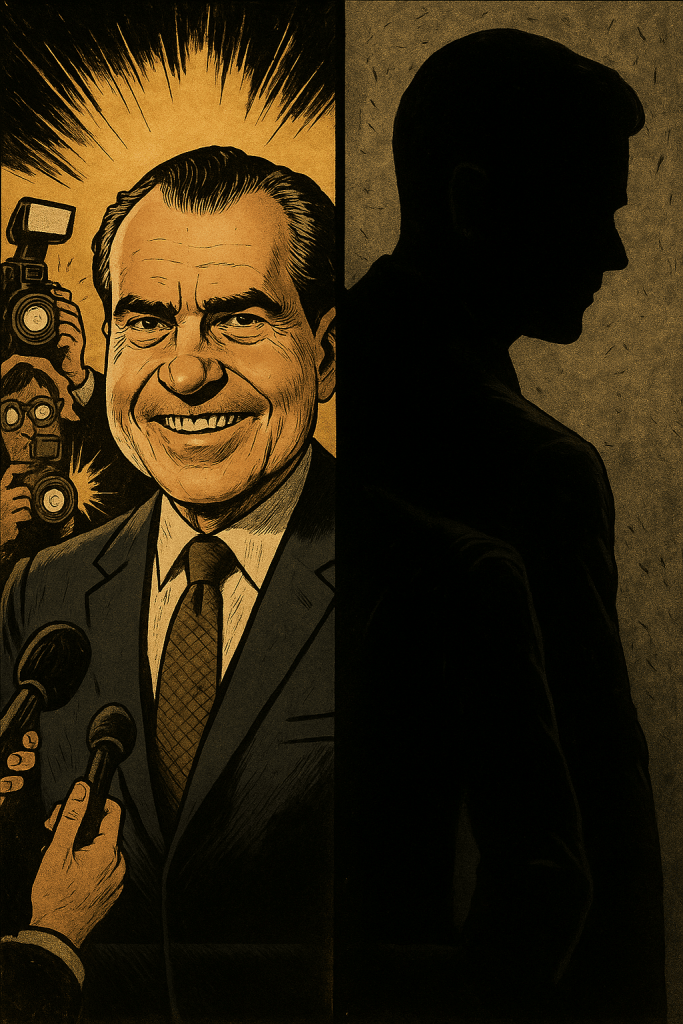
Thompson regularly attacked his fellow reporters, calling them cowards. He attacked traditional journalists for their “false objectivity” which he labeled as a moral cop out. He charged that by pretending to be neutral, the mainstream press weakly gave a platform to liars and con men and failed in their moral duty to expose the truth. 

Most journalists are too weak and scared to be honest.  
They hide behind objectivity because they are afraid 
to say who the liars are.” 
 
“The truth is never found in the middle.  
The middle is only where cowards hide.” 

Thompson knew manufactured outrage was an effective distraction. Today that manufactured outrage can be as simple and divisive as a new Cracker Barrel logo, or the building of a new ballroom in the east wing. Manufacture an outrage and you have a distraction. Thompson watched campaigns manufacture crises to hide failures. Today we call that a deep fake to manipulate an algorithm. The names have changed. The pattern has not.  

Third, he believed the corruption of both political parties and large corporations were responsible for the death of the American dream.  
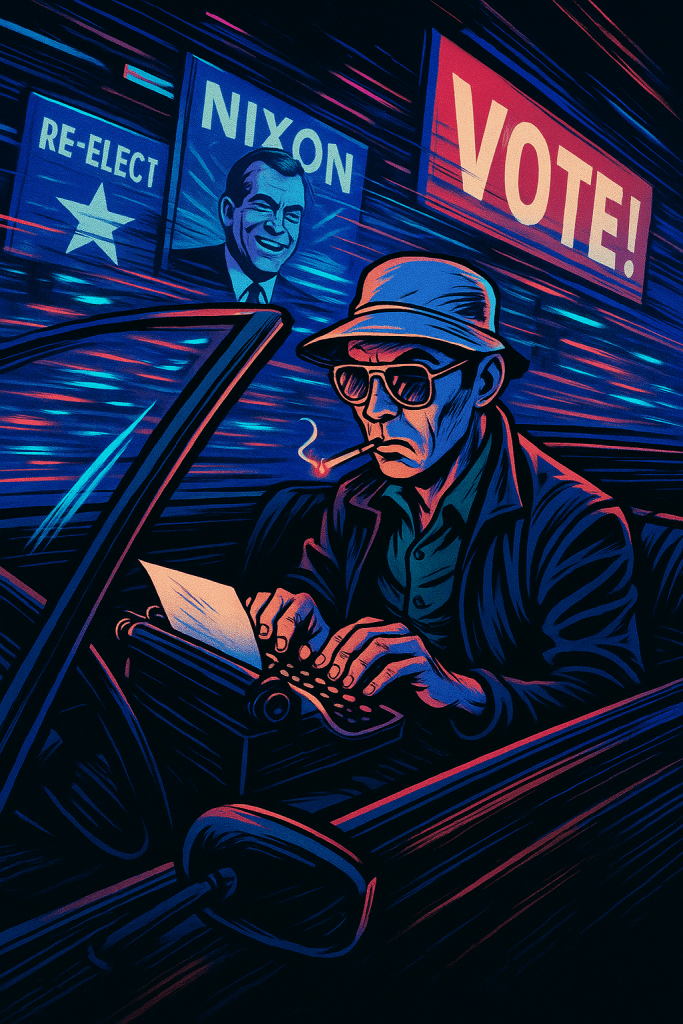
It sounds like an outrageous claim, but Hunter S. Thompson was a patriot. Thompson did not want us to trust politicians. He wanted us to question them, study them, laugh at them, and expose the machinery behind their grins. In a distracted age where outrage is content and spin is the new currency, our kids need a Thompson more than ever. They need to refuse to be hypnotized by a system that plays to our comfort. If he were alive today, he would relish covering the Trump era of politics and the take no prisoners scorched earth tactics of the Trump political machine.  

His entire body of work was driven by a deep sense of disappointment and outrage at the gap between America’s promise and its grim reality. Thompson warned about the death of the American dream. He believed in the promise of freedom, opportunity for all, and self-determination. He wrote to expose those that stood in the way of these ideals.  

Fear and Loathing in Las Vegas and his pieces on Nixon, is a laments. He believed the American Dream was murdered by political and corporate greed, hypocrisy, and spiritual decay. Issues that are still on the ballot today.  

Fourth, he writes with brutal honesty.  
Yes his language is tough, raw, and unfiltered. He purposely cut the polished, safe corporate-spin. He leaves in the drugs and alcohol to give the reader full perspective. By showing the reader that he too is imperfect, he built trust and credibility. He’s offering the entire picture. He is telling us the full story, warts, and all. 
 
Thompson refused to be lied to. When he saw distraction, gaslighting and misinformation in the political and corporate segments of our society, he called it out in his own abrasive style, not safely sanitized by his corporate editors. He was brave. He didn’t fear his position of dissent. Our kids are growing up in an age of bombardment of political spin, corporate messaging, social media performance, persuasion and disinformation. He gave his readers the truth, no matter how dark and uncomfortable.  

“Yes, I was tripping on mescaline, and yes, the truth is even crazier than this.”  

Here he’s performing an act of honesty, a commitment to the truth, however dark and uncomfortable it was. 

So, why should our kids read Thompson? His writing helps develop an essential skill for young adults, critical thinking, and skepticism. Our kids today are drowning in political content but can’t tell what’s spin and what’s truth. 

Thompson knew politics wasn’t a noble debate between competing visions; it was a traveling circus featuring distraction, disinformation, deep fakes and lies. He called out George Bush Sr.’s lie of “No New Taxes.” Instead of reporting what Bush said, he called the lie out. Gonzo journalism.  

“George Bush will say anything, do anything,  
and pretend to be anything if it helps him get elected.” 
Hunter S. Thompson, Rolling Stone 2004 election coverage 

Thompson didn’t want us to trust politicians, he wanted us to question them, study them, laugh at them, and expose their lies.  
 
Thompson watched as deceitfully crafted narratives crushed true substance. He watched branding, spin, and mythmaking decide who was viable. He realized that politics was marketing, not merit. Kids need to know this. They are already targeted by political content disguised as memes, jokes, and influencer reactions. 

Thompson saw how campaigns sell emotion in precise doses. Fear for motivation. Hope for sedation. This is exactly how modern political content farms work. A teenager scrolling political TikTok needs a BS filter stronger than anything we grew up with. 

Thompson was not a liberal icon. He was not a conservative mascot. He was anti-corruption, anti-cowardice, and anti-manipulation. He distrusted the entire machine. This is a priceless lesson for teens raised in a world where loyalty to a team is treated as a substitute for independent thought. Prove me wrong. 


Why a drug-fueled, brutally honest journalist remains one of the best teachers of critical thinking, skepticism, and media literacy for Gen Z.

Part 6 in our series, A Curriculum of Dissent 

Illustration of Hunter S. Thompson at a typewriter surrounded by chaotic political imagery and media symbols.

In our Curriculum of Dissent series, we explored The Great Gatsby and one man’s obsession with image, false love, and his fatal downfall when authenticity, decency, and empathy are replaced by the chase for status, image, and greed. (Click here to read that post) 

In Brave New World, we explored the dangers to our kids as governments and corporations use pleasure as a means of control, distraction to discourage deep critical thinking, and the death of the individual. (Click here to read that post) 

In The Catcher in the Rye, we explored Holden Caulfield’s search for empathy and how his search is still very important and relevant to our kids’ lives today. (Click here to read that post) 

Now, in this part of the series, we turn to the writing of Hunter S. Thompson, especially his fiercely honest look at American politics in Fear and Loathing on the Campaign Trail ’72.

Why does Thompson matter for the next generation?  
Thompson delivered several distinct themes to his writings.  

First, he refused to accept the status quo.  
He warned us of the modern media landscape before anyone else

Thompson was an extremely skeptical and critical writer that refused to accept the official narrative put out by political and corporate organizations. He was skeptical of staged photo ops and pushed to uncover the real story behind slick presentations. Thompson understood that political reporting devolved into image management. Politicians and corporations feed narratives to reporters. Reporters take those packaged narratives and repackage them to win viewers and ratings. Voters receive a neatly sanitized package of talking points. In today’s media climate, we can substitute newspapers and cable television for TikTok personalities and influencers, the dynamic has not changed. 

Thomson hated this version of journalism. So, he created the genre of “Gonzo” journalism. Gonzo journalism is where the reporter becomes part of the story, writing in first-person, blending factual reporting with personal experience and commentary. Emotion, outrage, and confrontation are preferred over decorum and complacency. He rejected the pre-packaged press release to get closer to the truth. Thompson defended his style, arguing that his unfiltered, biased account got closer to the truth than the sanitized, “objective” reporting of mainstream journalists who pretended they had no perspective. In other words, when Thompson saw something was wrong, he called it out. He never gave a politician a free platform to spread misinformation.  

“The job of a political journalist is not to report what the candidate says.  
It is to figure out what the candidate means.” 
(Fear and Loathing on the Campaign Trail ’72

“Objective journalism is one of the main reasons
American politics has been allowed to be so corrupt for so long.” 
The Independent, 1997 

“Some people will say that words like scum and rotten are wrong for Objective Journalism, which is true, but they miss the point. It was the built in blind spots of the objective rules and dogmas that allowed Nixon to slither into the White House.” 
(Fear and Loathing on the Campaign Trail ’72) 

Thompson’s beliefs surrounding political and corporate corruption still feel relevant today. Thompson believed that politicians sell image, not truth. He believed that the press became weak and unwitting accomplices. He understood that outrage is manufactured. Power thrives on distraction and fear. Thompson fought to expose this. His detractors called him a drug-fueled lunatic. But in reality, he was a patriot trying to save democracy. 

Second, Thompson hated hypocrisy, regardless of which side of the political and social spectrum you were on. It didn’t matter if you were Richard Nixon or a chapter president of The Hells Angles. 

“The Angels are violent and racist and they hate everybody. 
But at least they are honest about it. 
That is more than you can say for the people who run this country.” 
Hell’s Angels: A Strange and Terrible Saga 

He viewed figures like Richard Nixon not as political opponents. He went as far as to call them evil incarnate. He viewed politicians and corrupt CEO’s as men who presented and image of decorum and morality. But behind their packaged image he found men driven by greed, no limits dishonesty, disdain for service to their community and a hatred for the common person. In our present-day political climate filled with excerpts from the Epstein files, insider trading, financial corruption and moral bankruptcy, our kids could use a writer like Hunter S. Thompson to expose their hypocrisy. 

Thompson regularly attacked his fellow reporters, calling them cowards. He attacked traditional journalists for their “false objectivity” which he labeled as a moral cop out. He charged that by pretending to be neutral, the mainstream press weakly gave a platform to liars and con men and failed in their moral duty to expose the truth. 

Most journalists are too weak and scared to be honest.  
They hide behind objectivity because they are afraid 
to say who the liars are.” 
 
“The truth is never found in the middle.  
The middle is only where cowards hide.” 

Thompson knew manufactured outrage was an effective distraction. Today that manufactured outrage can be as simple and divisive as a new Cracker Barrel logo, or the building of a new ballroom in the east wing. Manufacture an outrage and you have a distraction. Thompson watched campaigns manufacture crises to hide failures. Today we call that a deep fake to manipulate an algorithm. The names have changed. The pattern has not.  

Third, he believed the corruption of both political parties and large corporations were responsible for the death of the American dream.  

It sounds like an outrageous claim, but Hunter S. Thompson was a patriot. Thompson did not want us to trust politicians. He wanted us to question them, study them, laugh at them, and expose the machinery behind their grins. In a distracted age where outrage is content and spin is the new currency, our kids need a Thompson more than ever. They need to refuse to be hypnotized by a system that plays to our comfort. If he were alive today, he would relish covering the Trump era of politics and the take no prisoners scorched earth tactics of the Trump political machine.  

His entire body of work was driven by a deep sense of disappointment and outrage at the gap between America’s promise and its grim reality. Thompson warned about the death of the American dream. He believed in the promise of freedom, opportunity for all, and self-determination. He wrote to expose those that stood in the way of these ideals.  

Fear and Loathing in Las Vegas and his pieces on Nixon, is a laments. He believed the American Dream was murdered by political and corporate greed, hypocrisy, and spiritual decay. Issues that are still on the ballot today.  

Fourth, he writes with brutal honesty.  
Yes his language is tough, raw, and unfiltered. He purposely cut the polished, safe corporate-spin. He leaves in the drugs and alcohol to give the reader full perspective. By showing the reader that he too is imperfect, he built trust and credibility. He’s offering the entire picture. He is telling us the full story, warts, and all. 
 
Thompson refused to be lied to. When he saw distraction, gaslighting and misinformation in the political and corporate segments of our society, he called it out in his own abrasive style, not safely sanitized by his corporate editors. He was brave. He didn’t fear his position of dissent. Our kids are growing up in an age of bombardment of political spin, corporate messaging, social media performance, persuasion and disinformation. He gave his readers the truth, no matter how dark and uncomfortable.  

“Yes, I was tripping on mescaline, and yes, the truth is even crazier than this.”  

Here he’s performing an act of honesty, a commitment to the truth, however dark and uncomfortable it was. 

So, why should our kids read Thompson? His writing helps develop an essential skill for young adults, critical thinking, and skepticism. Our kids today are drowning in political content but can’t tell what’s spin and what’s truth. 

Thompson knew politics wasn’t a noble debate between competing visions; it was a traveling circus featuring distraction, disinformation, deep fakes and lies. He called out George Bush Sr.’s lie of “No New Taxes.” Instead of reporting what Bush said, he called the lie out. Gonzo journalism.  

“George Bush will say anything, do anything,  
and pretend to be anything if it helps him get elected.” 
Hunter S. Thompson, Rolling Stone 2004 election coverage 

Thompson didn’t want us to trust politicians, he wanted us to question them, study them, laugh at them, and expose their lies.  
 
Thompson watched as deceitfully crafted narratives crushed true substance. He watched branding, spin, and mythmaking decide who was viable. He realized that politics was marketing, not merit. Kids need to know this. They are already targeted by political content disguised as memes, jokes, and influencer reactions. 

Thompson saw how campaigns sell emotion in precise doses. Fear for motivation. Hope for sedation. This is exactly how modern political content farms work. A teenager scrolling political TikTok needs a BS filter stronger than anything we grew up with. 

Thompson was not a liberal icon. He was not a conservative mascot. He was anti-corruption, anti-cowardice, and anti-manipulation. He distrusted the entire machine. This is a priceless lesson for teens raised in a world where loyalty to a team is treated as a substitute for independent thought. Prove me wrong. 

Leave a comment