Aldous Huxley didn’t fear censorship, he feared sedation. Nearly a century later, his “soma” has become our screens, our dopamine loops, and our endless scrolls.
Part 4 in our series: A Curriculum of Dissent
If you’ve been following our “Curriculum of Dissent,” you know we have to push our kids to find their own voices, their own opinions and thoughts, not just the easy answers. We explored The Great Gatsby and how that masterpiece predicted our age of filters and followers, and its warning about illusion, loneliness, and moral decay is hitting our kids harder than ever. You can read that post here.
We explored Catcher in the Rye and Holden Caufield was asking if anyone still cares about fragile things, a question our kids are still asking today. We specifically explored the need for empathy in today’s modern world. You can read that post here.
In this new instalment we will focus on Aldous Huxley’s Brave New World. If it’s been a while since you read the book, here’s a quick refresher.
Published in 1932, (1932) introduces a future where humans have traded freedom for comfort. Children are created in labs, sorted into castes, and conditioned to be perfectly content with their assigned roles. There’s no war, no poverty, no pain, but also no love, no art, and no individuality. To keep citizens docile, the government provides endless entertainment, casual sex, and a happiness drug called soma. The city is essentially a hedonistic and superficial culture.
Into this “perfect” world walks John, a man born outside the system who still feels grief, love, and faith. When he’s brought into the city, he’s repulsed by its hedonistic and superficial culture. Ultimately, the novel explores the conflict between stability and freedom, and the cost of engineered happiness. His refusal to numb himself exposes the novel’s core question: if pleasure and comfort erase suffering, do they also erase what makes us human?
It’s interesting to note, twenty six years after the book was published, Huxley doubled down on his prediction:
“If the first half of the 20th century was the era of the technical engineer, the 2nd half will be the era of the social engineers and the 21st century will be the era of the WORLD CONTROLLERS.”
So how exactly did Huxley’s predictions come true? Let’s look at three examples.
First: Using Pleasure as Control
In Brave New World, the citizens use and abuse a drug called SOMA. SOMA is freely distributed by a quick hit tablet used multiple times per day. It’s use is both habitual and encouraged. It is distributed freely and is widely accepted by the citizens. The SOMA induces a euphoric, dreamlike state and helps people to forget their troubles, allowing them to escape any pain, discomfort, or distress drug gives the user an euphoric boost, erasing all feelings of discomfort and anxiety. When using SOMA, life is perceived as perfect.
Now go back and read that paragraph again. This time replace the word SOMA with DOPAMINE and replace the word tablet with SOCIAL MEDIA.
In Brave New World, the citizens use and abuse a drug called DOPAMINE. DOPAMINE is freely distributed by a SOCIAL MEDIA used multiple times per day. It’s use is both habitual and encouraged. It is distributed freely and is widely accepted by the citizens. The DOPAMINE induces a euphoric, dreamlike state and helps people to forget their troubles, allowing them to escape any pain, discomfort, or distress drug gives the user an euphoric boost, erasing all feelings of discomfort and anxiety. When using DOPAMINE, life is perceived as perfect.
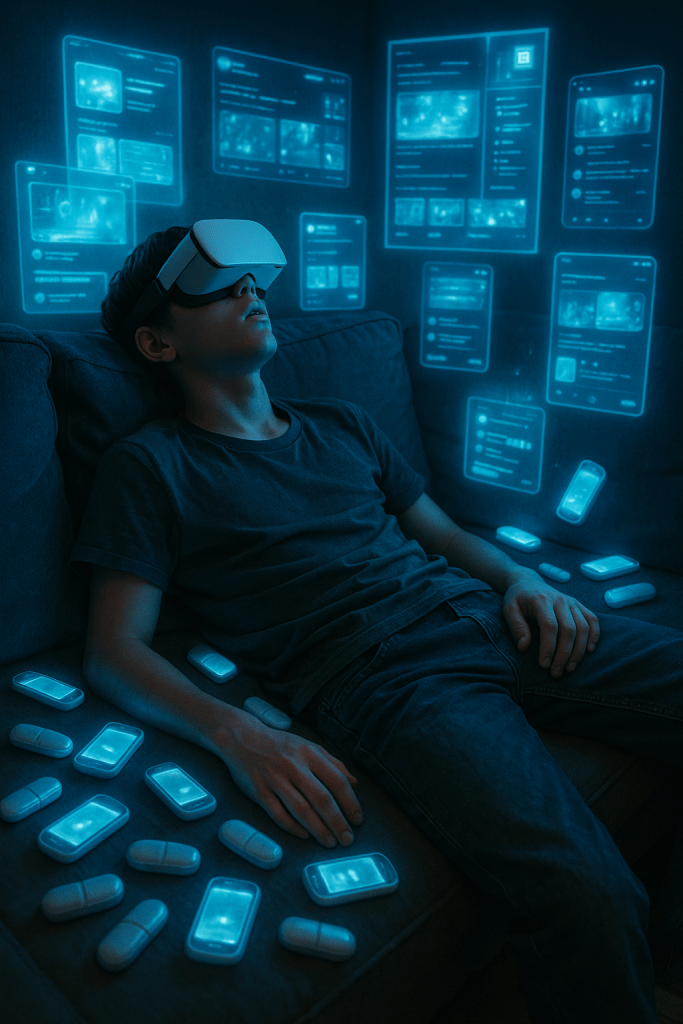
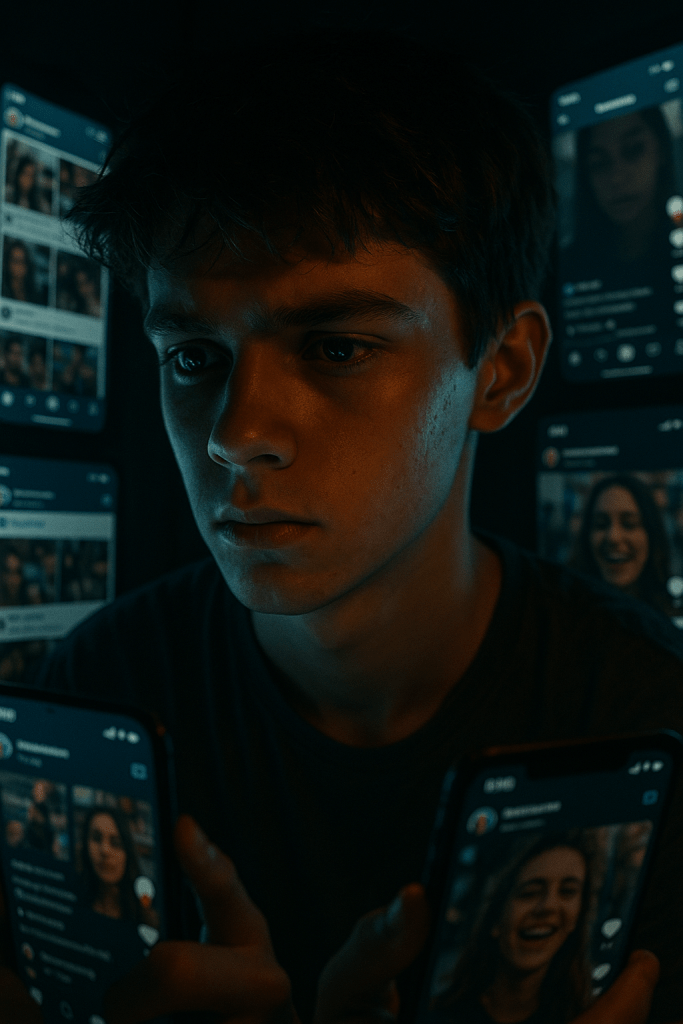
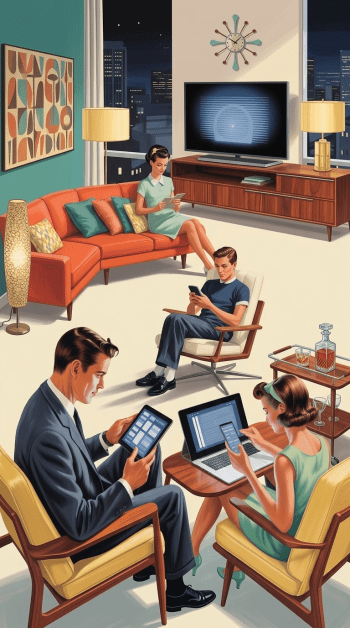
Soma numbs the citizens of the World State. Likes, views, streaks, and dopamine loops numb ours. Brave New World is here and we now live in a sedation state.
Second: Distraction Discourages Depth
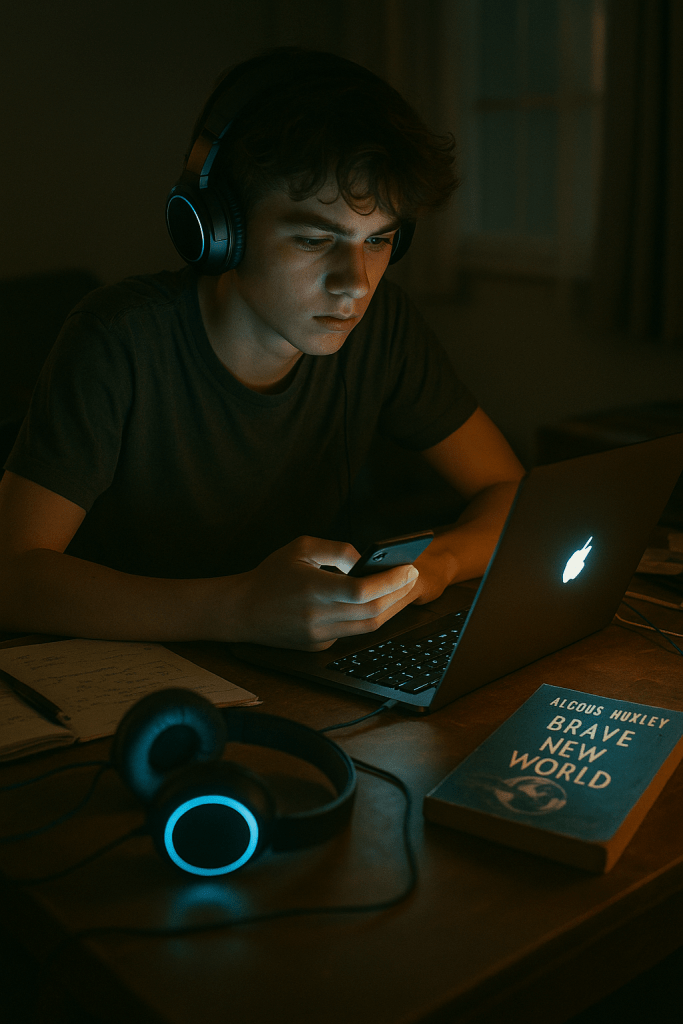
In the Brave New World, nobody reads serious books, paints, debates, or wonders why. It’s too difficult. The character of John is considered a savage because his mother taught him how to read Shakespeare.
In Brave New World, thinking is messy, difficult and confusing. It’s also emotional. In Huxley’s world it’s easier to tune out, take SOMA, play games, watch shows, and swipe left.
That’s where we are now. A generation that can scroll for six hours but can’t sit in silence for ten minutes.
In both worlds people live in an environment of constant distraction. The average teenager spends over eight hours a day on screens, not counting schoolwork. When silence feels like anxiety and stillness feels like failure, we’ve built exactly what Huxley feared, a culture avoiding deep thought.
Third: The Death of the Individual
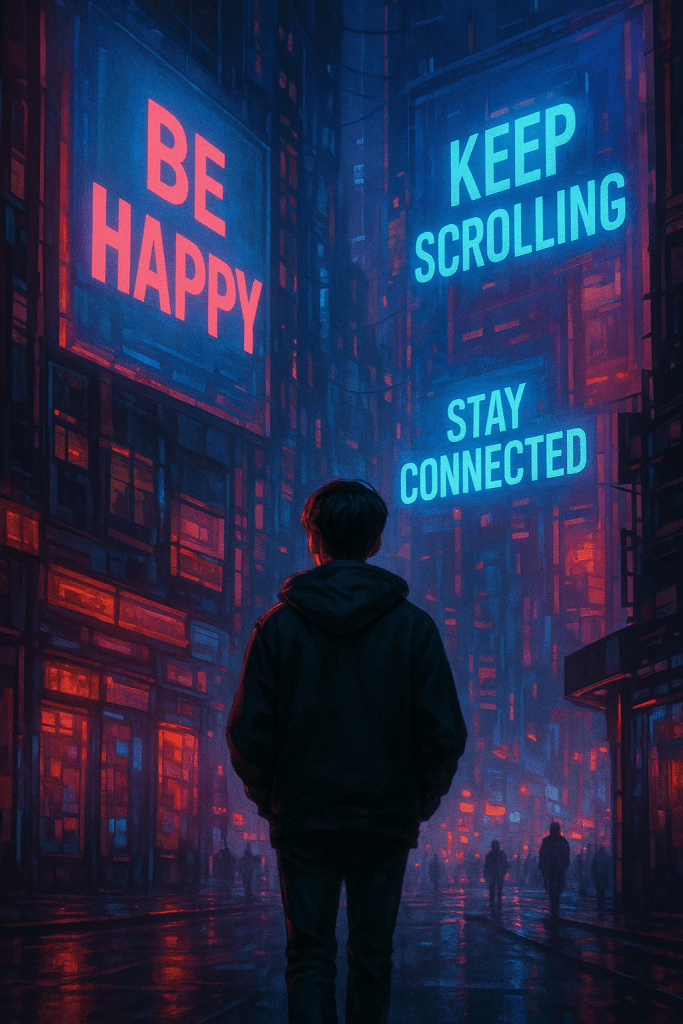
In Brave New World, everyone is born into a class, Alpha to Epsilon. And they are conditioned to like their role. Factory workers are electrically shocked as babies to learn to dislike books and art. They are conditioned to accept menial tasks and labor.
Yes, I know. I hear you pushing back “My kids aren’t built in labs.”
Ture, but they are shaped and groomed by algorithms. And that is a responsibility we parent have completely abdicated.
Big Data and every online app, game and platform knows their preferences, habits, fears, and purchase history. Every “For You” feed is a now a digital caste system: engineered identity packaged for maximum engagement. The conditioning Huxley warned about doesn’t happen in classrooms or labs anymore. It happens in newsfeeds.
The eccentrics, the philosophers, the Merry Pranksters, the beatniks, the free thinkers, the bohemians, the freaks and the heads are all gone. Say what you will, these groups forced discussion and forced new ideas of individuality and personal independence into our national conscience and forced discussions among generations at dinner tables across the country.
And it’s disappearing at an alarming rate.
At the end of Brave New World, John, the book’s only unconditioned human, rejects the comfortable society around him. He demands the right to think, to feel pain, to be miserable.
“I claim them all,” he says. “The right to be unhappy.”
That line hits harder every year.
Because that’s what freedom actually is, the right to feel everything, even the hard parts. Our kids think freedom means convenience: unlimited choices, instant access, permanent comfort. But real freedom, creative, moral, emotional, always involves discomfort.
It’s the right to sit in silence. To feel boredom. To ask dangerous questions.
That’s the only way to stay human in a world that wants to keep you entertained.
BraveNewWorld #AldousHuxley #DadBodWeekly #CurriculumOfDissent #Parenting #SocialMedia #TeenCulture #BooksNotFilters #Authenticity #DigitalAddiction


 DAD BOD WEEKLY