
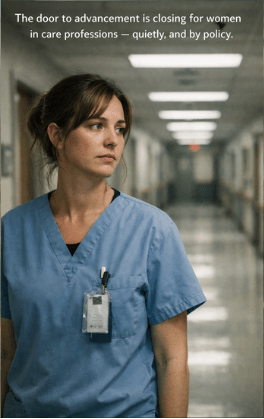
How a Quiet Student Loan Change Is Trapping Women in Lower-Paying Careers. New federal loan limits quietly block women from advancing in nursing, teaching, and mental health, while male-dominated fields get a pass.
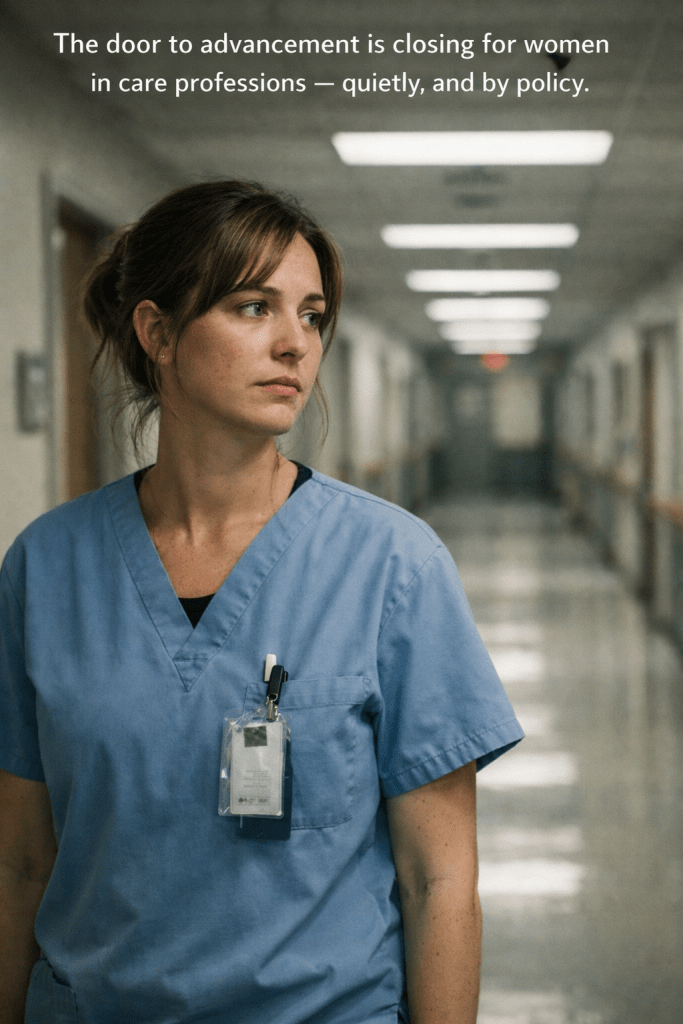
If you’re a dad with a daughter who dreams of something bigger than an entry-level job, you should be angry about what’s coming. In July 2026, just six months away, the federal government is putting new limits on how much students can borrow through Grad PLUS loans. Before, students could borrow enough to cover the full cost of grad school. Now, there’s a cap: $20,000 a year, $100,000 total. That sounds like a lot, but for many advanced degrees, it won’t get you to graduation day. It’s a quiet way to keep certain people, especially women, stuck in lower-paying, entry-level positions.
This isn’t some fringe issue. More than 440,000 students used these loans last academic year. Now, all those people are looking at a future where the “helping hand” to a better life is being yanked away.
And here’s the unfair part of the new deal, only some careers are getting hit with these new limits. If you’re pursuing a “Non-Professional grad degree, you’re capped. Guess what fields are suddenly “non-professional”. Nursing, education, mental health, social work, jobs overwhelmingly filled by women. For example, nearly 90% of nurses are women, and the new rules still let students borrow for entry-level nursing, but not for the higher degrees that lead to leadership roles and better pay. The same thing happens in education: you can borrow to become a teacher, but not to get the education credentials needed to move up to administration or counseling.
Look at the numbers: 77% of K-12 public school teachers are women. In social work, it’s 87%. These aren’t small exceptions, these are the backbone of our care workforce. And yet, if your daughter wants to advance in these fields, she’s getting boxed out.

Meanwhile, which programs still count as “professional” and get full access to loans? Medicine, law, dentistry, pharmacy, and a handful of others, fields where men still make up the majority. It’s not subtle.
These changes hit hardest for women, first-generation students, and students of color, who are most likely to rely on federal loans. Their other option? Private loans, with higher rates and fewer protections. So much for equal opportunity.

And this isn’t just about individual dreams. The US is staring down major shortages in nursing and teaching, jobs that are absolutely essential. If we make it harder for people to train for these roles, everyone feels it. Who’s going to staff the hospitals and classrooms? Who’s going to provide mental health support when our kids need it most?

By carving out exceptions for male-dominated fields and cutting off support for female-dominated ones, our government is sending a clear message about whose work matters. This isn’t just a policy tweak. It’s a statement about what, and who, we value.
These decisions won’t just shape paychecks, they’ll shape the future of healthcare, education, and social services in this country. And the people hurt most aren’t wealthy students from elite schools. They’re women and working families whose communities rely on these jobs.
So, yeah, dads should be pissed. We should all be. This isn’t the direction we want for our daughters, or for the country.



 DAD BOD WEEKLY