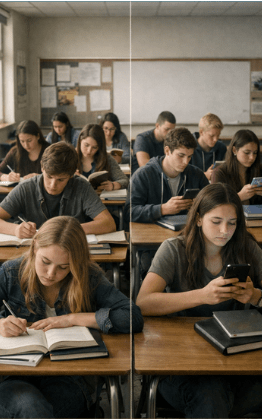
An AI generated photos of high school kid sin compromising positions

Our kids are in serious trouble when their image can be created anywhere, doing anything, saying everything, even when they didn’t.

Nothing in this photo is real. But it could include an image of your son or daughter.


I love living in a time of incredible technological advances. From healthcare to online learning, career development to entertainment, A.I. delivers the potential for anyone to make a better and mor interesting life. But, we must acknowledge that with every leap forward, new challenges emerge, especially when it comes to the safety of our children.

This week, the buzz is all about a new AI product name Sora 2. Watching the early content people created with SORA 2 is fascinating. It’s also one of the most dangerous pieces of technology threatening our children…ever.

We’ve entered the era of the deepfake, creating an uncharted landscape of digital threats that every parent needs to understand. A deepfake is a video, image, or audio recording that has been digitally altered or entirely generated using artificial intelligence to make it appear that someone said or did something they never actually did. Some examples include:

A fake video of a celebrity or politician saying something controversial. Even though they didn’t. Check out this Elvis deepfake. If they can put words in Elvis’ mouth, they can do it to your son or daughter.

Now think of this video with your daughter as the subject and she’s exclaiming “I love blow jobs!”. Think of your son celebrating at a party yelling “Yeah! I banged her!” It doesn’t have to be real. It just has to be funny enough to pass around school.

A fake video of two people in compromising positions.
Nothing in the video below is real. The wrong person with the wrong tools can put your son or daughter in any situation they wish. Any twisted mind can now have your daughter flirting with her English teacher. Maybe someone wants to create a video of your son running around a house party in noting but a jock strap and cowboy hat. Futures and careers will be ruined by this. Who will be held responsible?


The other night I pulled up a short video on my phone. Again, nothing in this video is real. I showed it to my teenage son.

He watched, squinted, and said, “So what’s fake about it?” He has no idea who Mr. Rogers is. To him this could be a real clip from an old TV show. Truth, history and context can now be manipulated at will.

So, what exactly are we up against, and why is this so dangerous for our kids?

1. The Horrifying Reality of Sextortion

This is the most disturbing threat. I mentioned in a previous post that 26,000 kids have been caught in a sextortion trap, resulting in suicides and self harm. (You can read that post here: https://dadbodweekly.substack.com/p/sextortion-scams-the-hidden-online)

Imagine someone taking an image or video of your child, perhaps from social media, and using AI to place their face onto explicit content. The goal is often blackmail, or “sextortion,” where they threaten to release these fake images unless demands are met. The psychological toll on a child (and family) subjected to this is unimaginable. Creating incredibly convincing fake videos is now easier than ever. This takes cyberbullying to a fatal level. 1 in 7 victims admitted they hurt themselves after being targeted by sextortion. Let that sink in 1 in 7.

2. Fabricating Evidence: Vandalism and False Accusations

Deepfakes can be used to create entirely fabricated scenarios. Picture this: a deepfake video showing your child at the scene of vandalism, or engaged in behavior they never actually did. Anybody can place him at the scene of a rival high school that was sprayed with graffiti. Any body can place him at a party where a girl was sexually assaulted. Anybody can make your daughter drunk at a party “asking for it”.

While sophisticated tools might eventually uncover these fakes, the immediate damage to reputation, the stress of false accusations, and the potential legal implications can be devastating for families. The ability to generate realistic scenes makes it incredibly difficult to discern truth from fiction.

3. The Spread of Misinformation and Radicalization
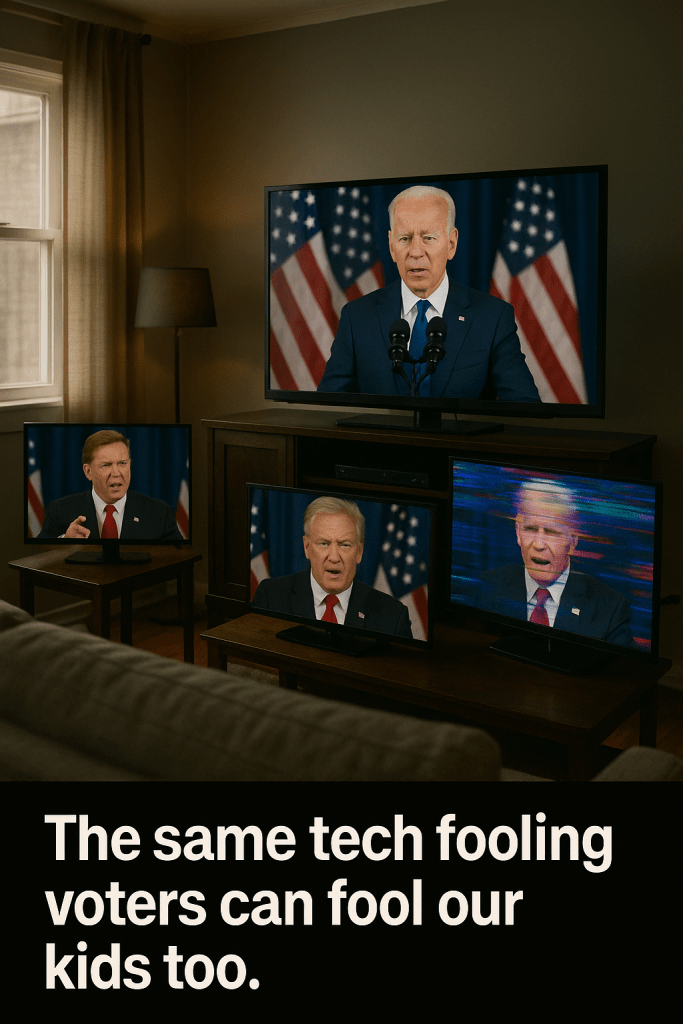
We now live in an an age where misinformation spreads like wildfire. Do you remember Pizza Gate and the memes stating the Democrats had a secret sex ring running out of a pizza parlor in Washington DC? As crazy as it sounds, people believed it. They believed it to a point where one man practiced vigilante justice and shot at that pizza parlor with a semi automatic gun.

Now apply that to next year’s upcoming elections…with realistic video.
Next year malicious actors will create fake videos of politicians and celebrities engaging in unconscionable acts, , spreading lies and dangerous ideologies.
Deep fakes will flood the next election season, fake speeches, doctored videos, and “caught on camera” scandals designed to discredit or enrage.

For impressionable young minds, distinguishing between a legitimate source and a sophisticated deepfake will be nearly impossible. This will be used to expose children to harmful content, like far-right incel movements, under the guise of something legitimate.

4. Targeting Your Family’s Reputation

It’s not just our children who are at risk. Deepfakes can be used to spread false information about you or your family, impacting your job, relationships, and mental well-being. A fake video showing you saying or doing something you didn’t can quickly spiral out of control, causing immense personal and professional damage.

👀 What Parents Can Do (and What We Can’t)

Let’s be honest, you can’t stop AI. You can’t chase down every fake.
But you can start doing this now:

Lock down your child’s social profiles. Make sure only trusted people can see photos or videos.

Talk to your kids about synthetic media. Not a “lecture,” just a heads-up: “Hey, not everything that looks real is.”

Teach digital skepticism. Just because something feels authentic doesn’t mean it is.

Document and report. If someone uses your child’s image maliciously, screenshot everything and go straight to authorities.

🕯️ The New Reality

We’re crossing a line humanity’s never crossed before, where seeing is no longer believing. Sora2 and its successors are going to change everything about trust, truth, and reputation.

Our kids will live in a world where evidence can be faked, innocence can be questioned, and the burden of proof shifts to the victim. It’s a dark thought, but an honest one.

We can’t stop the invasion of this technology. But we can teach our children to navigate it, eyes open, skeptical, and smart.

If this hit a nerve, share it with another parent.

We can’t fight what we don’t understand, and the age of the deep fake isn’t coming.

It’s already here.


Our kids are in serious trouble when their image can be created anywhere, doing anything, saying everything, even when they didn’t.

Nothing in this photo is real. But it could include an image of your son or daughter.


I love living in a time of incredible technological advances. From healthcare to online learning, career development to entertainment, A.I. delivers the potential for anyone to make a better and mor interesting life. But, we must acknowledge that with every leap forward, new challenges emerge, especially when it comes to the safety of our children.

This week, the buzz is all about a new AI product name Sora 2. Watching the early content people created with SORA 2 is fascinating. It’s also one of the most dangerous pieces of technology threatening our children…ever.

We’ve entered the era of the deepfake, creating an uncharted landscape of digital threats that every parent needs to understand. A deepfake is a video, image, or audio recording that has been digitally altered or entirely generated using artificial intelligence to make it appear that someone said or did something they never actually did. Some examples include:

A fake video of a celebrity or politician saying something controversial. Even though they didn’t. Check out this Elvis deepfake. If they can put words in Elvis’ mouth, they can do it to your son or daughter.

Now think of this video with your daughter as the subject and she’s exclaiming “I love blow jobs!”. Think of your son celebrating at a party yelling “Yeah! I banged her!” It doesn’t have to be real. It just has to be funny enough to pass around school.

A fake video of two people in compromising positions.
Nothing in the video below is real. The wrong person with the wrong tools can put your son or daughter in any situation they wish. Any twisted mind can now have your daughter flirting with her English teacher. Maybe someone wants to create a video of your son running around a house party in noting but a jock strap and cowboy hat. Futures and careers will be ruined by this. Who will be held responsible?


The other night I pulled up a short video on my phone. Again, nothing in this video is real. I showed it to my teenage son.

He watched, squinted, and said, “So what’s fake about it?” He has no idea who Mr. Rogers is. To him this could be a real clip from an old TV show. Truth, history and context can now be manipulated at will.

So, what exactly are we up against, and why is this so dangerous for our kids?

1. The Horrifying Reality of Sextortion

This is the most disturbing threat. I mentioned in a previous post that 26,000 kids have been caught in a sextortion trap, resulting in suicides and self harm. (You can read that post here: https://dadbodweekly.substack.com/p/sextortion-scams-the-hidden-online)

Imagine someone taking an image or video of your child, perhaps from social media, and using AI to place their face onto explicit content. The goal is often blackmail, or “sextortion,” where they threaten to release these fake images unless demands are met. The psychological toll on a child (and family) subjected to this is unimaginable. Creating incredibly convincing fake videos is now easier than ever. This takes cyberbullying to a fatal level. 1 in 7 victims admitted they hurt themselves after being targeted by sextortion. Let that sink in 1 in 7.

2. Fabricating Evidence: Vandalism and False Accusations

Deepfakes can be used to create entirely fabricated scenarios. Picture this: a deepfake video showing your child at the scene of vandalism, or engaged in behavior they never actually did. Anybody can place him at the scene of a rival high school that was sprayed with graffiti. Any body can place him at a party where a girl was sexually assaulted. Anybody can make your daughter drunk at a party “asking for it”.

While sophisticated tools might eventually uncover these fakes, the immediate damage to reputation, the stress of false accusations, and the potential legal implications can be devastating for families. The ability to generate realistic scenes makes it incredibly difficult to discern truth from fiction.

3. The Spread of Misinformation and Radicalization

We now live in an an age where misinformation spreads like wildfire. Do you remember Pizza Gate and the memes stating the Democrats had a secret sex ring running out of a pizza parlor in Washington DC? As crazy as it sounds, people believed it. They believed it to a point where one man practiced vigilante justice and shot at that pizza parlor with a semi automatic gun.

Now apply that to next year’s upcoming elections…with realistic video.
Next year malicious actors will create fake videos of politicians and celebrities engaging in unconscionable acts, , spreading lies and dangerous ideologies.
Deep fakes will flood the next election season, fake speeches, doctored videos, and “caught on camera” scandals designed to discredit or enrage.

For impressionable young minds, distinguishing between a legitimate source and a sophisticated deepfake will be nearly impossible. This will be used to expose children to harmful content, like far-right incel movements, under the guise of something legitimate.

4. Targeting Your Family’s Reputation

It’s not just our children who are at risk. Deepfakes can be used to spread false information about you or your family, impacting your job, relationships, and mental well-being. A fake video showing you saying or doing something you didn’t can quickly spiral out of control, causing immense personal and professional damage.

👀 What Parents Can Do (and What We Can’t)

Let’s be honest, you can’t stop AI. You can’t chase down every fake.
But you can start doing this now:

Lock down your child’s social profiles. Make sure only trusted people can see photos or videos.

Talk to your kids about synthetic media. Not a “lecture,” just a heads-up: “Hey, not everything that looks real is.”

Teach digital skepticism. Just because something feels authentic doesn’t mean it is.

Document and report. If someone uses your child’s image maliciously, screenshot everything and go straight to authorities.

🕯️ The New Reality

We’re crossing a line humanity’s never crossed before, where seeing is no longer believing. Sora2 and its successors are going to change everything about trust, truth, and reputation.

Our kids will live in a world where evidence can be faked, innocence can be questioned, and the burden of proof shifts to the victim. It’s a dark thought, but an honest one.

We can’t stop the invasion of this technology. But we can teach our children to navigate it, eyes open, skeptical, and smart.

If this hit a nerve, share it with another parent.

We can’t fight what we don’t understand, and the age of the deep fake isn’t coming.

It’s already here.

One response to “Sora2 and the Coming Deep-Fake Crisis: What Parents Need to Know.”

  1. Australia Banned Social Media for Kids under 16, And Honestly, We Should Too. – DAD BOD WEEKLY Avatar

    […] and fake news. Social media is no longer a credible place for gathering objective information. (You can read my rant against deep fake AI here). Critics are arguing the new law can be a privacy nightmare requiring biometric data/ID from all […]

    Like

Leave a reply to Australia Banned Social Media for Kids under 16, And Honestly, We Should Too. – DAD BOD WEEKLY Cancel reply