Aldus Huxley’s BRAVE NEW WORLD Warned Us. Dancing on the Graves of History.

When Huxley turned Westminster Abbey into a nightclub, he wasn’t just being provocative. He was giving us a warning we haven’t finished ignoring.
There is a scene in Brave New World that most of us skim over. We miss it as we focus on bigger events, like the tour of the Hatcheries or the encouraged and unchecked use of the pacifying drug soma.

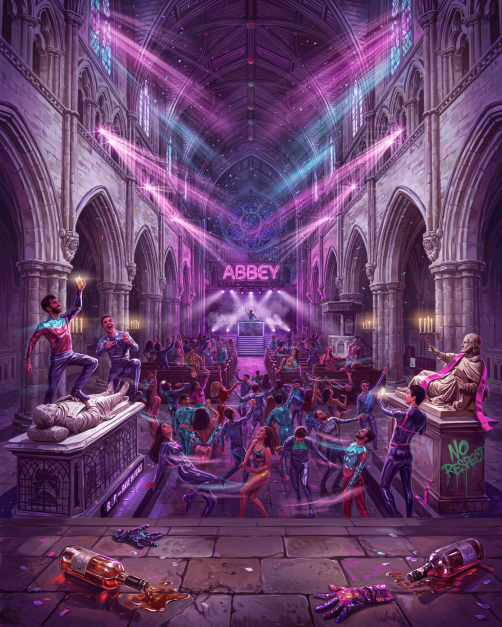
It’s a little-remembered, rarely quoted scene that says more about how we are living today than any other scene in the book. In this scene, only a few paragraphs long, the main character Bernard Marx takes a girl, Lenina, on a date in the city of London. Eventually they go dancing at the Westminster Abbey Cabaret.

I needed to read the passage twice. Westminster Abbey is a royal church in London, best known for royal events such as the coronation of King Charles. But Westminster Abbey is much more than a church on a double-decker tourist route. It’s a place where over ten centuries of British and world history are preserved and studied every day. And that’s exactly why Huxley chose this location for this scene.

If you’ve never been to Westminster Abbey, let me set the scene for you. The centuries-old building holds a massive collection of tombs, monuments, and statues dedicated to individuals who challenged systemic oppression, fought for civil liberties, and dedicated their lives to human equality.

A few examples of people who are buried, memorialized, or recognized in the Abbey include:

Nelson Mandela
A Memorial Ledger Stone was placed in the Nave in 2018. This black granite stone honors the South African anti-apartheid revolutionary, political leader, and philanthropist. Mandela spent 27 years in prison before leading his nation through a peaceful transition away from white minority rule. He served as South Africa’s first Black president and established a global standard for truth and reconciliation.

Dr. Martin Luther King Jr.
A statue of the definitive leader of the American Civil Rights Movement. He used nonviolent civil disobedience to dismantle Jim Crow segregation laws, secure the Voting Rights Act of 1965, and advocate for systemic economic and racial equality across the globe before his assassination in 1968.

Dietrich Bonhoeffer
A statue of the German Lutheran pastor and theologian, who was an outspoken critic of Adolf Hitler’s Nazi regime from its inception, stands in the Abbey. He fiercely opposed the persecution of Jewish people, worked actively with the German resistance, and was executed at Flossenbürg concentration camp in 1945 for his opposition to state-sponsored genocide.

Archbishop Oscar Romero
A statue of the Archbishop of San Salvador who became the “voice of the voiceless” in El Salvador. He spoke out aggressively against poverty, social injustice, assassinations, and torture carried out by the military government during the country’s civil war. He was assassinated while celebrating Mass in 1980.

While these are modern examples, the Abbey has memorials for notable people who have advanced modern thinking and welfare from all periods of history, from Sir Isaac Newton to Charles Darwin and abolitionist Zachary Macaulay.

Westminster Abbey also honors those who have fallen for their country. It is where the Unknown Warrior lies, representing every soldier who died nameless in World War I.

Examples like this are exactly why Huxley chose Westminster Abbey for the setting of this scene. In Huxley’s World State, the people turned a hallowed place of remembrance into a shallow, trendy nightclub where people dance on the graves of those who tried to build a better society.

No one in the crowd finds this strange, or mourns what was lost. The music plays, the drinks flow, and the dancing never stops. The past is simply gone, and nobody misses it, because they were conditioned never to know it existed.

What makes this scene so disturbing is the cheerfulness. The dancers at Westminster Abbey Cabaret aren’t rebels tearing something down out of rage. They’re just having a nice night out. The Abbey wasn’t destroyed in a revolution. It was repurposed through indifference. Nobody cared about the history and the struggles of our forefathers and what they fought for. And that provided an opportunity for the Brave New World leaders to take power.

“History is bunk.”
— Henry Ford, as quoted in Brave New World

The World State’s controllers don’t burn books in the streets. They simply stopped teaching history. They replace remembrance with entertainment. They give people enough pleasure that the past starts to feel irrelevant, then unnecessary, then incomprehensible. The Abbey doesn’t need to be burned down if you can get everyone to stop caring about what it meant.

“So, what’s the big deal?” My son asks me, looking over my shoulder as I write this. It’s important, because history isn’t a list of dates. History is a record of our choices. History is a record of the consequences of those choices. History is about how people grab power, remove freedom. History is about how people treat others who are different.
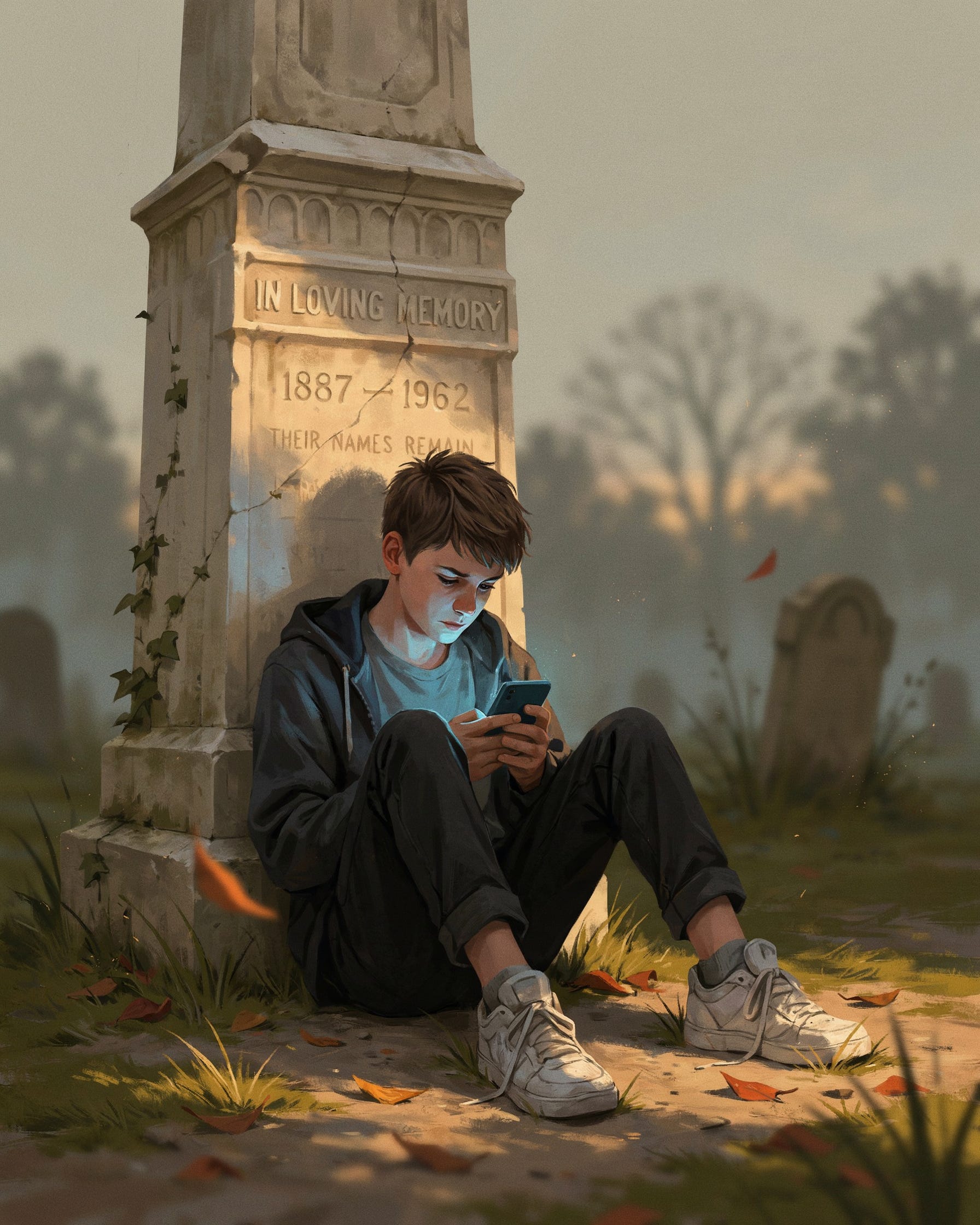
When the people dance at Westminster Abbey Cabaret, they are literally stepping over all of that.

Huxley’s World State doesn’t produce ignorance through force. It produces it through design. Children are conditioned from day one with the phrase “History is bunk.” Entertainment is made so immediately satisfying that sitting with complex issues feels like punishment. The World Controllers understood something that authoritarian regimes throughout history have also understood: you don’t need to destroy memory if you can make people prefer forgetting.

The Westminster Abbey scene isn’t science fiction anymore, it’s a plan. When a generation grows up with more information available than any human in history and yet knows less about the past than any generation in recent memory, Huxley’s warning lands true.

Today, thirty-two percent of high school seniors score below “basic” on reading assessments. This means they can’t find details in a text to help them understand its meaning. We need to pause and let that sink in. Over one third of our kids can’t read at a basic critical level to understand the meaning of a written piece.

Compare that stat to roughly 23 to 34 million TikTok videos posted per day. TikTok delivers 1 billion views per day. The average user now spends 1 hour and 37 minutes per day on TikTok, time that has more than tripled since 2019. Meanwhile, high school reading scores just hit their lowest point in 30 years.

We are living in a world remarkably similar to the one Huxley described: depth is replaced with entertainment, memory with novelty, and the past feels less engaging than whatever is happening right now. This is happening on an enormous scale. The Abbey hasn’t been turned into a nightclub. But our attention has been, turned into a sort of nightclub, always seeking the next distraction.

Bernard and Lenina didn’t make that choice. It was made for them before they were born. That’s the horror. They can’t miss what they were never given.

If you think my premise is a stretch and “it can’t happen here,” let’s look at a few examples.
The “Scourged Back” Photograph
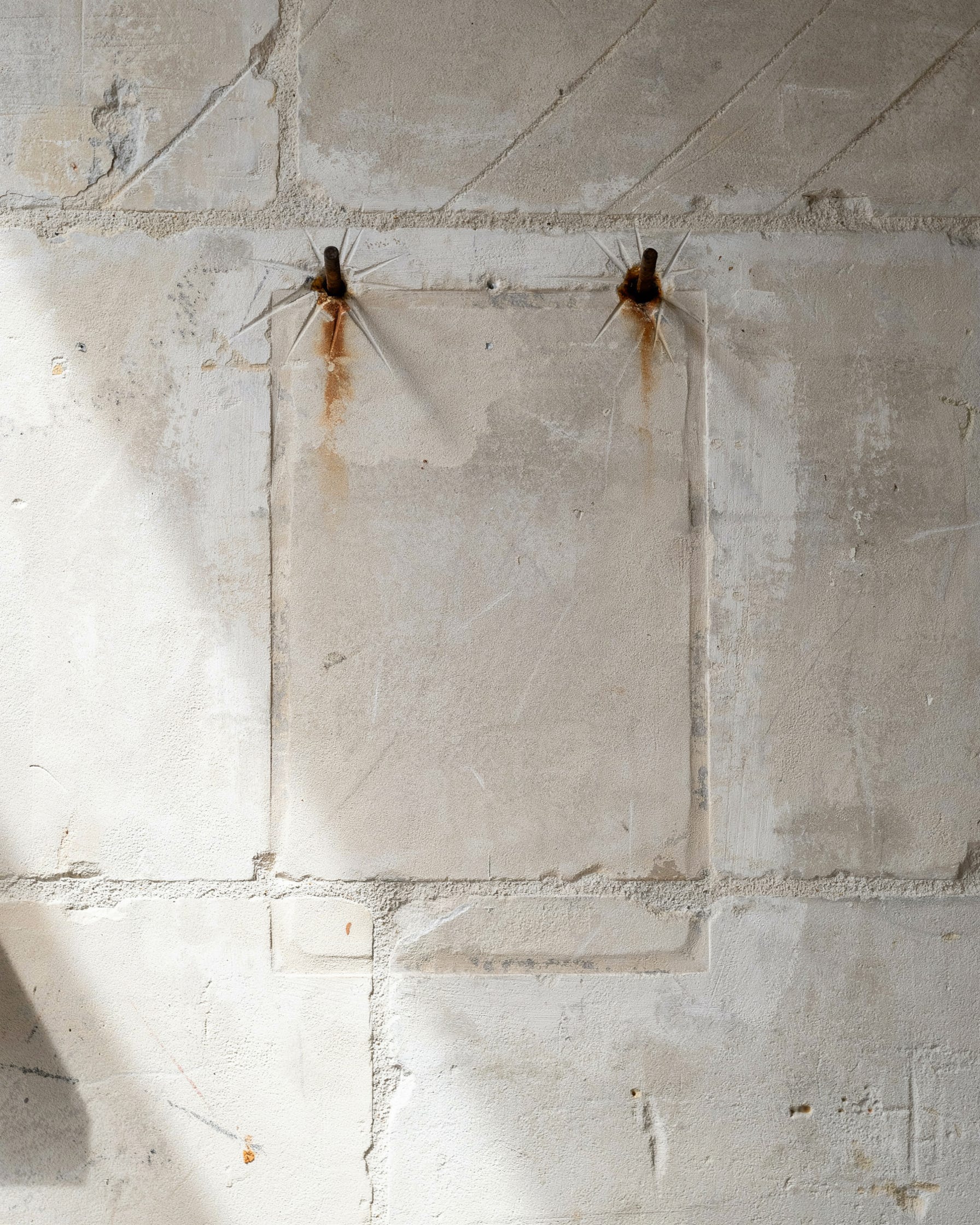
The National Park Service removed the iconic photograph showing the scarred back of an enslaved man from exhibits at Fort Pulaski National Monument in Georgia, one of the most visceral pieces of evidence documenting slavery’s brutality.

Bunker Hill Monument
The National Park Service ordered the removal of three quotes from interpretive panels, including reflections on slavery, immigration, and an anti-war message from Vietnam veterans.

Muir Woods
An exhibit called “History Under Construction,” which addresses the Native Coast Miwok people and the racist ideologies of figures who helped protect the monument, was removed in July 2025.

Harpers Ferry
Materials related to John Brown’s 1859 abolitionist raid at Harpers Ferry National Historical Park are targeted for removal or revision.

Huxley’s bet, and the bet of every book in this series, is that reading is itself the act of resistance. To sit with a difficult text, in a world engineered to keep you perpetually entertained, is to insist that the past matters. That the people who built the Abbey, the poets buried in it, and the soldiers honored there deserve to be remembered.

Even if the music is playing, even if everyone else is dancing.


When Huxley turned Westminster Abbey into a nightclub, he wasn’t just being provocative. He was giving us a warning we haven’t finished ignoring.

There is a scene in Brave New World that most of us skim over. We miss it as we focus on bigger events, like the tour of the Hatcheries or the encouraged and unchecked use of the pacifying drug soma.

It’s a little-remembered, rarely quoted scene that says more about how we are living today than any other scene in the book. In this scene, only a few paragraphs long, the main character Bernard Marx takes a girl, Lenina, on a date in the city of London. Eventually they go dancing at the Westminster Abbey Cabaret.

I needed to read the passage twice. Westminster Abbey is a royal church in London, best known for royal events such as the coronation of King Charles. But Westminster Abbey is much more than a church on a double-decker tourist route. It’s a place where over ten centuries of British and world history are preserved and studied every day. And that’s exactly why Huxley chose this location for this scene.

If you’ve never been to Westminster Abbey, let me set the scene for you. The centuries-old building holds a massive collection of tombs, monuments, and statues dedicated to individuals who challenged systemic oppression, fought for civil liberties, and dedicated their lives to human equality.

A few examples of people who are buried, memorialized, or recognized in the Abbey include:

Nelson Mandela
A Memorial Ledger Stone was placed in the Nave in 2018. This black granite stone honors the South African anti-apartheid revolutionary, political leader, and philanthropist. Mandela spent 27 years in prison before leading his nation through a peaceful transition away from white minority rule. He served as South Africa’s first Black president and established a global standard for truth and reconciliation.

Dr. Martin Luther King Jr.
A statue of the definitive leader of the American Civil Rights Movement. He used nonviolent civil disobedience to dismantle Jim Crow segregation laws, secure the Voting Rights Act of 1965, and advocate for systemic economic and racial equality across the globe before his assassination in 1968.

Dietrich Bonhoeffer
A statue of the German Lutheran pastor and theologian, who was an outspoken critic of Adolf Hitler’s Nazi regime from its inception, stands in the Abbey. He fiercely opposed the persecution of Jewish people, worked actively with the German resistance, and was executed at Flossenbürg concentration camp in 1945 for his opposition to state-sponsored genocide.

Archbishop Oscar Romero
A statue of the Archbishop of San Salvador who became the “voice of the voiceless” in El Salvador. He spoke out aggressively against poverty, social injustice, assassinations, and torture carried out by the military government during the country’s civil war. He was assassinated while celebrating Mass in 1980.

While these are modern examples, the Abbey has memorials for notable people who have advanced modern thinking and welfare from all periods of history, from Sir Isaac Newton to Charles Darwin and abolitionist Zachary Macaulay.

Westminster Abbey also honors those who have fallen for their country. It is where the Unknown Warrior lies, representing every soldier who died nameless in World War I.

Examples like this are exactly why Huxley chose Westminster Abbey for the setting of this scene. In Huxley’s World State, the people turned a hallowed place of remembrance into a shallow, trendy nightclub where people dance on the graves of those who tried to build a better society.

No one in the crowd finds this strange, or mourns what was lost. The music plays, the drinks flow, and the dancing never stops. The past is simply gone, and nobody misses it, because they were conditioned never to know it existed.

What makes this scene so disturbing is the cheerfulness. The dancers at Westminster Abbey Cabaret aren’t rebels tearing something down out of rage. They’re just having a nice night out. The Abbey wasn’t destroyed in a revolution. It was repurposed through indifference. Nobody cared about the history and the struggles of our forefathers and what they fought for. And that provided an opportunity for the Brave New World leaders to take power.

“History is bunk.”
— Henry Ford, as quoted in Brave New World

The World State’s controllers don’t burn books in the streets. They simply stopped teaching history. They replace remembrance with entertainment. They give people enough pleasure that the past starts to feel irrelevant, then unnecessary, then incomprehensible. The Abbey doesn’t need to be burned down if you can get everyone to stop caring about what it meant.

“So, what’s the big deal?” My son asks me, looking over my shoulder as I write this. It’s important, because history isn’t a list of dates. History is a record of our choices. History is a record of the consequences of those choices. History is about how people grab power, remove freedom. History is about how people treat others who are different.

When the people dance at Westminster Abbey Cabaret, they are literally stepping over all of that.

Huxley’s World State doesn’t produce ignorance through force. It produces it through design. Children are conditioned from day one with the phrase “History is bunk.” Entertainment is made so immediately satisfying that sitting with complex issues feels like punishment. The World Controllers understood something that authoritarian regimes throughout history have also understood: you don’t need to destroy memory if you can make people prefer forgetting.

The Westminster Abbey scene isn’t science fiction anymore, it’s a plan. When a generation grows up with more information available than any human in history and yet knows less about the past than any generation in recent memory, Huxley’s warning lands true.

Today, thirty-two percent of high school seniors score below “basic” on reading assessments. This means they can’t find details in a text to help them understand its meaning. We need to pause and let that sink in. Over one third of our kids can’t read at a basic critical level to understand the meaning of a written piece.

Compare that stat to roughly 23 to 34 million TikTok videos posted per day. TikTok delivers 1 billion views per day. The average user now spends 1 hour and 37 minutes per day on TikTok, time that has more than tripled since 2019. Meanwhile, high school reading scores just hit their lowest point in 30 years.

We are living in a world remarkably similar to the one Huxley described: depth is replaced with entertainment, memory with novelty, and the past feels less engaging than whatever is happening right now. This is happening on an enormous scale. The Abbey hasn’t been turned into a nightclub. But our attention has been, turned into a sort of nightclub, always seeking the next distraction.

Bernard and Lenina didn’t make that choice. It was made for them before they were born. That’s the horror. They can’t miss what they were never given.

If you think my premise is a stretch and “it can’t happen here,” let’s look at a few examples.

The “Scourged Back” Photograph
The National Park Service removed the iconic photograph showing the scarred back of an enslaved man from exhibits at Fort Pulaski National Monument in Georgia, one of the most visceral pieces of evidence documenting slavery’s brutality.

Bunker Hill Monument
The National Park Service ordered the removal of three quotes from interpretive panels, including reflections on slavery, immigration, and an anti-war message from Vietnam veterans.

Muir Woods
An exhibit called “History Under Construction,” which addresses the Native Coast Miwok people and the racist ideologies of figures who helped protect the monument, was removed in July 2025.

Harpers Ferry
Materials related to John Brown’s 1859 abolitionist raid at Harpers Ferry National Historical Park are targeted for removal or revision.

Huxley’s bet, and the bet of every book in this series, is that reading is itself the act of resistance. To sit with a difficult text, in a world engineered to keep you perpetually entertained, is to insist that the past matters. That the people who built the Abbey, the poets buried in it, and the soldiers honored there deserve to be remembered.

Even if the music is playing, even if everyone else is dancing.

Leave a comment